
If you source bearings from China, the National Day holiday is an important date to include in your purchasing schedule.
In 2026, China’s official National Day holiday runs from October 1 to October 7. During this period, many factories, offices and logistics providers operate with reduced staffing or temporarily pause normal operations. Exact schedules may vary between suppliers, so buyers should confirm arrangements directly rather than assume that every company follows the same timetable.
For a standard product, a short holiday may only delay a reply by a few days. Bearing projects, however, often involve more than placing an order from a catalogue. Dimensions, internal clearance, noise level, lubrication, sealing, tolerances, packaging and application conditions may all need to be confirmed before production begins.
Planning these details early can prevent a seven-day holiday from turning into a much longer project delay.
When Is China’s National Day Holiday in 2026?
The official National Day holiday in mainland China is:
- Holiday period: Thursday, October 1 to Wednesday, October 7, 2026
- Normal operations: Actual reopening dates depend on each factory, office and logistics provider
National Day is also commonly known as “Golden Week.” It is one of the major annual holiday periods in China. Increased domestic travel can affect staffing, trucking capacity and warehouse operations before and after the official holiday.
Buyers should therefore consider not only the seven holiday days, but also possible production and logistics congestion around them.
How Can the Holiday Affect a Bearing Order?
A bearing order normally moves through several separate stages. The holiday may affect each stage differently.
| Order stage | Possible holiday impact | What the buyer should confirm |
|---|---|---|
| RFQ and specification review | Technical replies may take longer | Bearing model, dimensions, application and expected quantity |
| Sample preparation | Sample assembly, inspection or special lubrication may pause | Sample quantity, performance requirements and delivery address |
| Production scheduling | Unconfirmed orders may move to the post-holiday schedule | Purchase order, payment status and required delivery date |
| Quality inspection | Noise, vibration or dimensional testing may be rescheduled | Inspection standards and required reports |
| Packaging | Custom logos, labels, individual bags or boxes may require additional time | Artwork, marking and packaging format |
| Shipping | Pickup, consolidation and export handling may become congested | Shipping method, freight forwarder and destination |
The main risk is usually not the holiday itself. The larger risk is reaching the production stage with important specifications still unconfirmed.
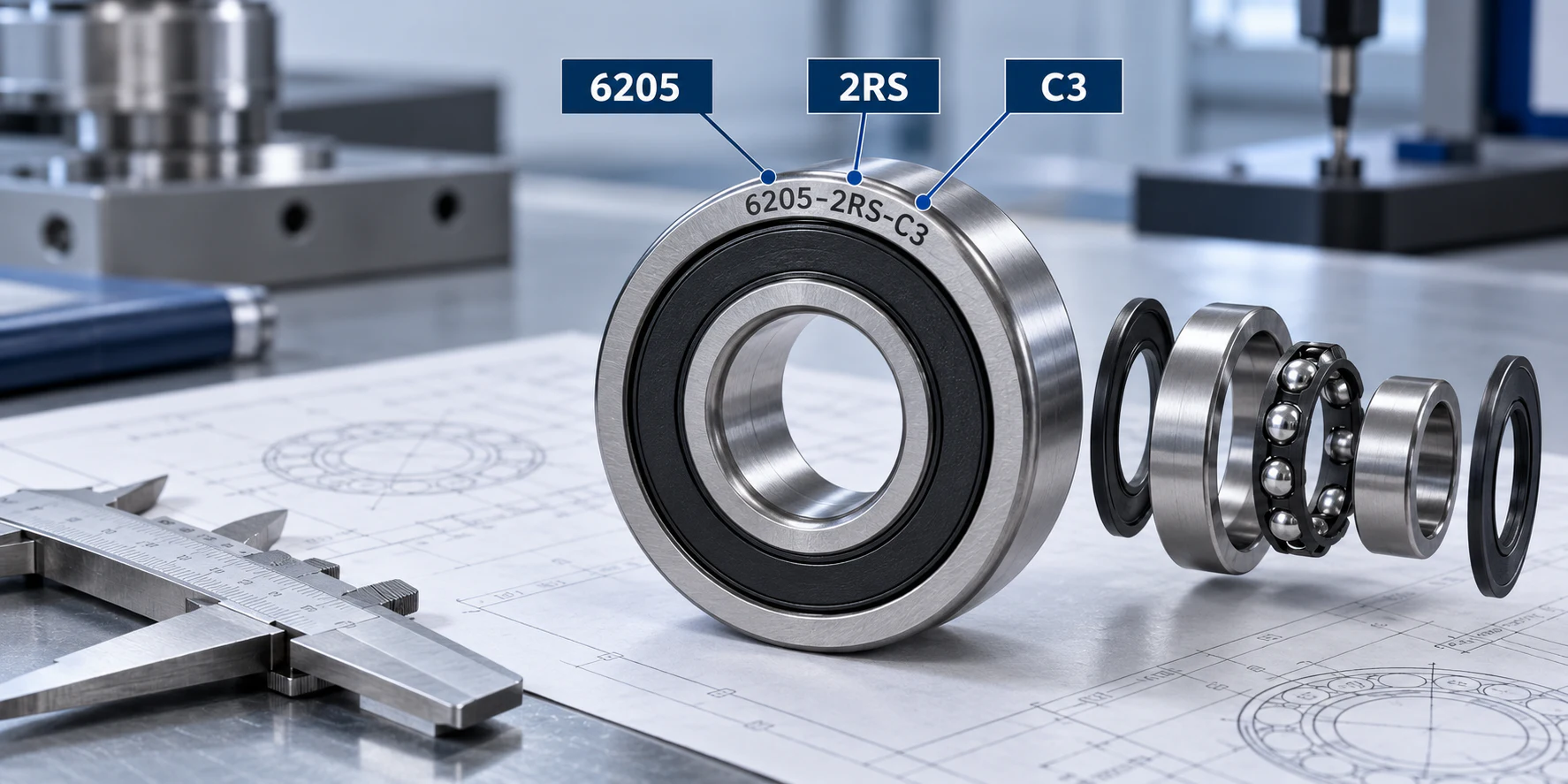
For example, a buyer may provide only a bearing number such as 685ZZ, 608ZZ or 6201. The model identifies the basic size, but it may not fully define the product required for a specific motor or gearbox.
Internal clearance, lubrication, noise grade, rotational speed, shield type and packaging can still affect whether the bearing is suitable for the application.
If these details are clarified only after the holiday, the effective delay may be longer than expected.
What Should Bearing Buyers Confirm Before the Holiday?
Before asking a supplier to reserve production capacity, prepare the following information whenever possible.
1. Bearing Model and Dimensions
Provide the complete bearing designation. If the model is uncertain, send the inner diameter, outer diameter and width.
A clear photograph of the bearing marking can also help the supplier identify the corresponding Chinese or international model number.
2. Application
Explain where the bearing will be installed, such as:
- Small electric motors
- Industrial motors
- Gearboxes
- Drone motors
- Robot joints
- Medical handpieces
- Household appliances
- Power tools
Application information helps the supplier understand whether low noise, high speed, corrosion resistance, temperature resistance or special lubrication is more important than price alone.
3. Operating Conditions
Useful operating information includes:
- Rotational speed
- Radial or axial load
- Operating temperature
- Required service life
- Noise and vibration expectations
- Exposure to moisture, dust or chemicals
- Shaft and housing fit
- Continuous or intermittent operating time
Not every project requires a complete engineering data sheet. Even a short description of the actual working conditions can reduce the risk of selecting the wrong bearing grade.
4. Material, Seals and Lubrication
Confirm whether the project requires:
- Bearing steel or stainless steel
- Metal shields or rubber seals
- Standard grease
- High-temperature grease
- Low-temperature grease
- Light oil
- Ceramic balls or other special configurations
These differences can affect availability, sample preparation time, production cost and minimum order quantity.
A bearing with the same basic dimensions may perform very differently when the material, closure or lubricant changes.
5. Quantity and Project Stage
Tell the supplier whether the requirement is for:
- Initial sample evaluation
- Engineering validation
- A pilot order
- Existing mass production
- A replacement for the current supplier
A requirement for 20 test pieces should be handled differently from a repeat production order of 20,000 pieces.
Sharing the expected mass-production quantity also helps the supplier recommend an appropriate quality level instead of quoting a sample without understanding the commercial target.
6. Required Delivery Date
Avoid using only terms such as “urgent” or “as soon as possible.”
Provide the date when the bearings must arrive at your factory, not only the date when you want them to leave China.
This allows the supplier and freight forwarder to work backward from the required arrival date and determine whether the schedule is realistic.
How Far in Advance Should You Place a Bearing Order?
There is no single lead time for every bearing order.
Stock availability, quantity, accuracy grade, lubrication, testing requirements and customized packaging all influence the schedule.
As a general reference, LUMI Bearing’s typical preparation time is:
- Samples: approximately 7–10 days
- Mass production: approximately 20–30 days after specifications and order details are confirmed
These are normal reference times rather than guaranteed dates for every project.
Customized grease, laser marking, special noise requirements, individual packaging or non-standard production may require additional time.
For an order close to a major holiday, buyers should confirm three dates separately:
- When all technical specifications will be finalized
- When production and inspection can be completed
- When the shipment can be collected by the freight forwarder
This is more reliable than asking only for the total lead time.
What If You Send an Enquiry During the Holiday?
You do not need to wait until the holiday ends to prepare an enquiry.
Send the bearing list, application, quantity and target delivery date as early as possible. The supplier can review the request when the relevant sales and engineering staff are available and identify any missing information before issuing a final quotation.
For a faster and more accurate response, include:
- Bearing model or dimensions
- Photographs or drawings, if available
- Application and operating speed
- Current quality problem, if replacing an existing supplier
- Sample quantity
- Estimated mass-production quantity
- Required delivery date
- Destination country or Chinese freight-forwarder address
A well-prepared enquiry can often save more time than sending repeated messages containing only model numbers and a request for the lowest price.
Do Logistics Services Stop Completely?
Not necessarily.
Some ports, couriers and freight services continue operating during the holiday, but staffing, domestic pickup, warehouse receiving and customs-related coordination may be limited.
The most common issue is coordination between several parties.
The bearing factory may have completed the goods, but the packaging supplier, domestic trucker or freight-forwarder warehouse may follow a different holiday schedule.
Before shipment, confirm:
- Whether the freight forwarder’s warehouse will accept cargo
- The last available pickup date before the holiday
- Whether the shipment requires consolidation
- Whether export documents have been completed
- The expected sailing or flight schedule
- When normal warehouse receiving will resume
Buyers using their own freight forwarder in China should share the warehouse address and contact details early.
A Short Planning Checklist for Overseas Buyers
Before China’s National Day holiday, check the following:
- The bearing model and specification are fully confirmed
- The application and operating conditions have been shared
- Samples have been tested under actual operating conditions
- The approved sample is clearly identified as the production reference
- Noise, vibration, clearance and lubrication requirements are documented
- Logo, label and packaging artwork are approved
- Purchase order and payment arrangements are complete
- Inspection requirements are agreed before production
- The supplier and freight forwarder have confirmed their schedules
- The required arrival date includes international transit time
This checklist is especially important when changing suppliers.
A good sample is only the first step. Consistency between the approved sample and the mass-production batch should also be confirmed through production controls and final inspection.
Plan the Order Around the Application, Not Only the Holiday
The National Day holiday is a predictable event. Most delays can be managed when the buyer and supplier exchange complete information early.
The more important question is whether the bearing specification, quality level and production reference are clear enough for the actual application.
A rushed order placed before a holiday can create more risk than a carefully confirmed order scheduled immediately afterward.
If you are planning a new bearing sample, pilot order or mass-production purchase, send us the bearing models, application, quantity and required delivery date.
The LUMI Bearing team can review the specification and advise a realistic sample, production and shipping schedule.
Contact LUMI Bearing for lead-time confirmation before placing your order.