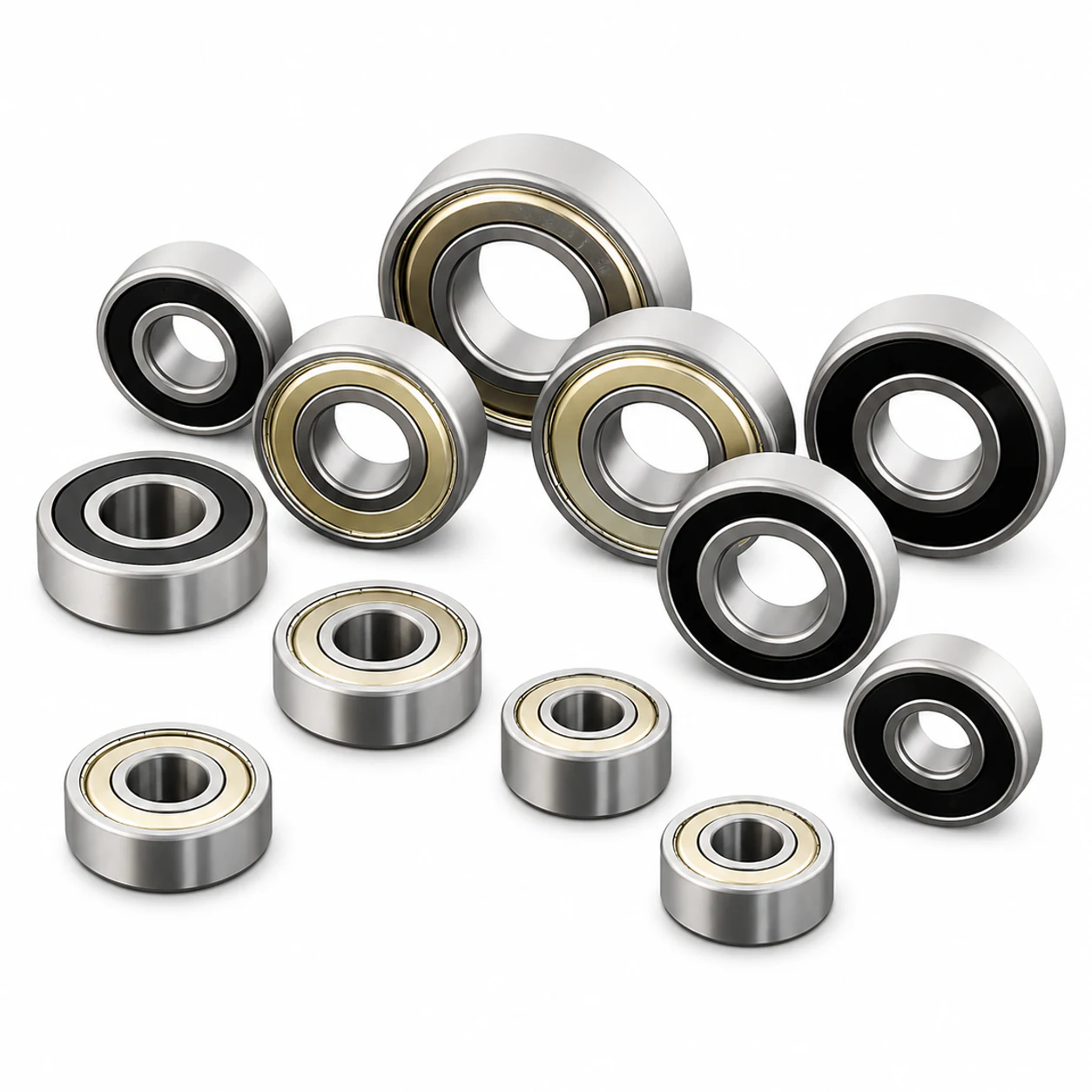
Stainless steel bearings are selected when corrosion resistance, moisture, cleaning conditions or environmental exposure make conventional bearing steel less suitable.
Material grade, closure, lubricant, load and speed must be reviewed together; stainless steel is corrosion resistant, not completely rust-proof.
* Closed width is the published boundary width for the listed ZZ or 2RS variant. Where both closures are listed, no ZZ-to-2RS width difference was found in the referenced catalogues for these models. Load and permissible speed still require confirmation for the actual grade, closure and lubricant.
Engineering definition
What Is a Stainless Steel Bearing?
Engineers normally move from bearing steel to stainless steel because the operating environment changes the failure risk. Humidity, condensation, direct water, cleaning chemicals and cleanliness controls can make corrosion or lubricant condition more important than the maximum catalogue load rating.
01
Environment changes the failure risk
Humidity, condensation, water, washdown and cleaning chemicals can make corrosion or lubricant condition more important than the dry-service catalogue rating.
02
The bearing is a material system
Raceways, balls, cage, closures and lubricant can use different materials. The stainless grade on one component does not define the complete bearing.
03
Corrosion resistance has limits
Stainless steel is not rust-proof. Salt, reactive chemicals, temperature, storage and damaged or contaminated surfaces can still lead to corrosion.
Material selection
Stainless Steel Materials Used in Bearings
These grades describe component roles, not three interchangeable complete-bearing options. Raceway duty usually requires a hardened martensitic stainless steel.
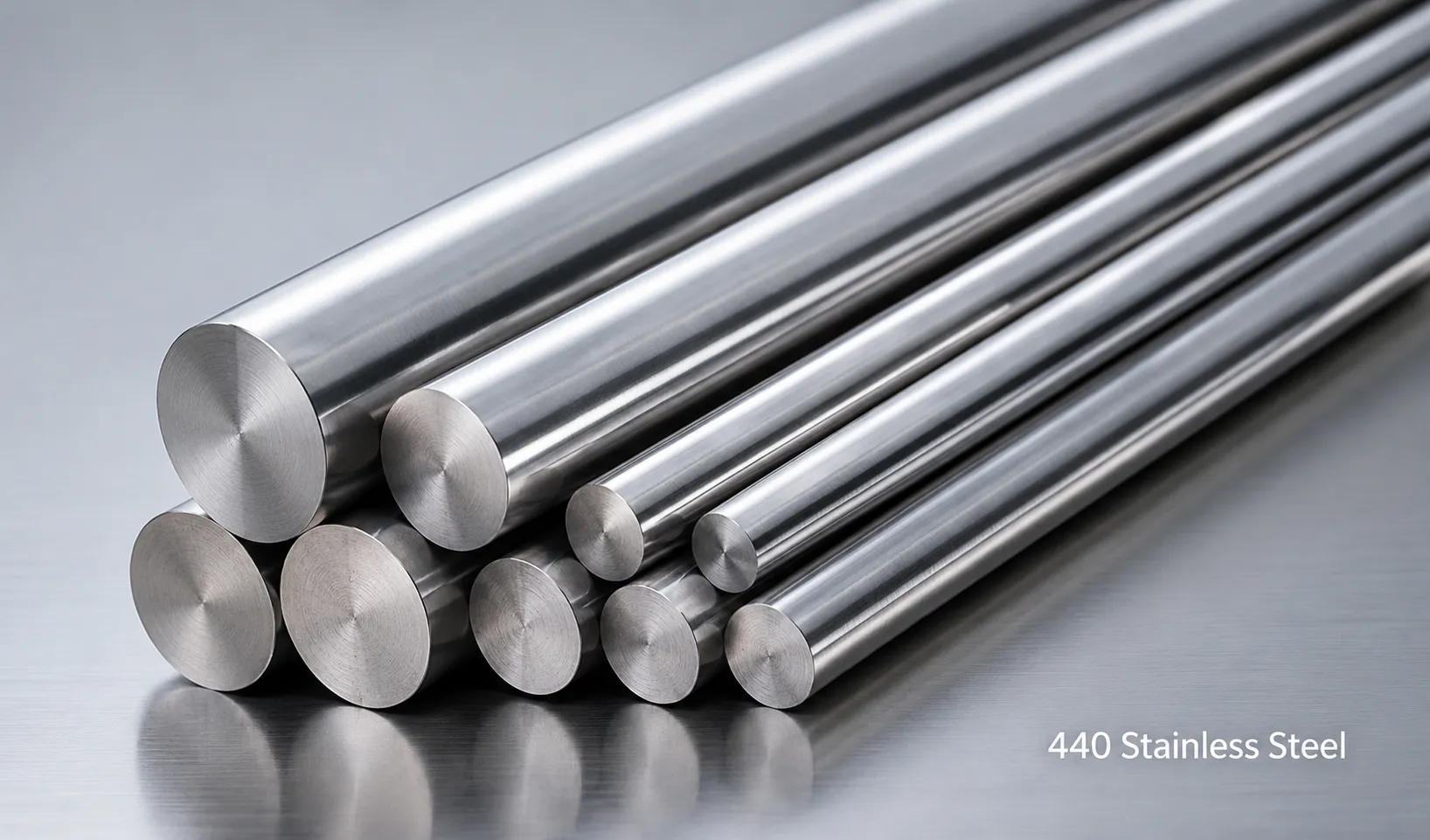
440 / 440C Stainless Steel
Hardenable martensitic stainless steel
The typical stainless bearing material in this group. Hardened 440C-type steels are used for raceways, rings and balls where rolling-contact duty requires hardness and wear resistance together with better corrosion resistance than conventional bearing steel.
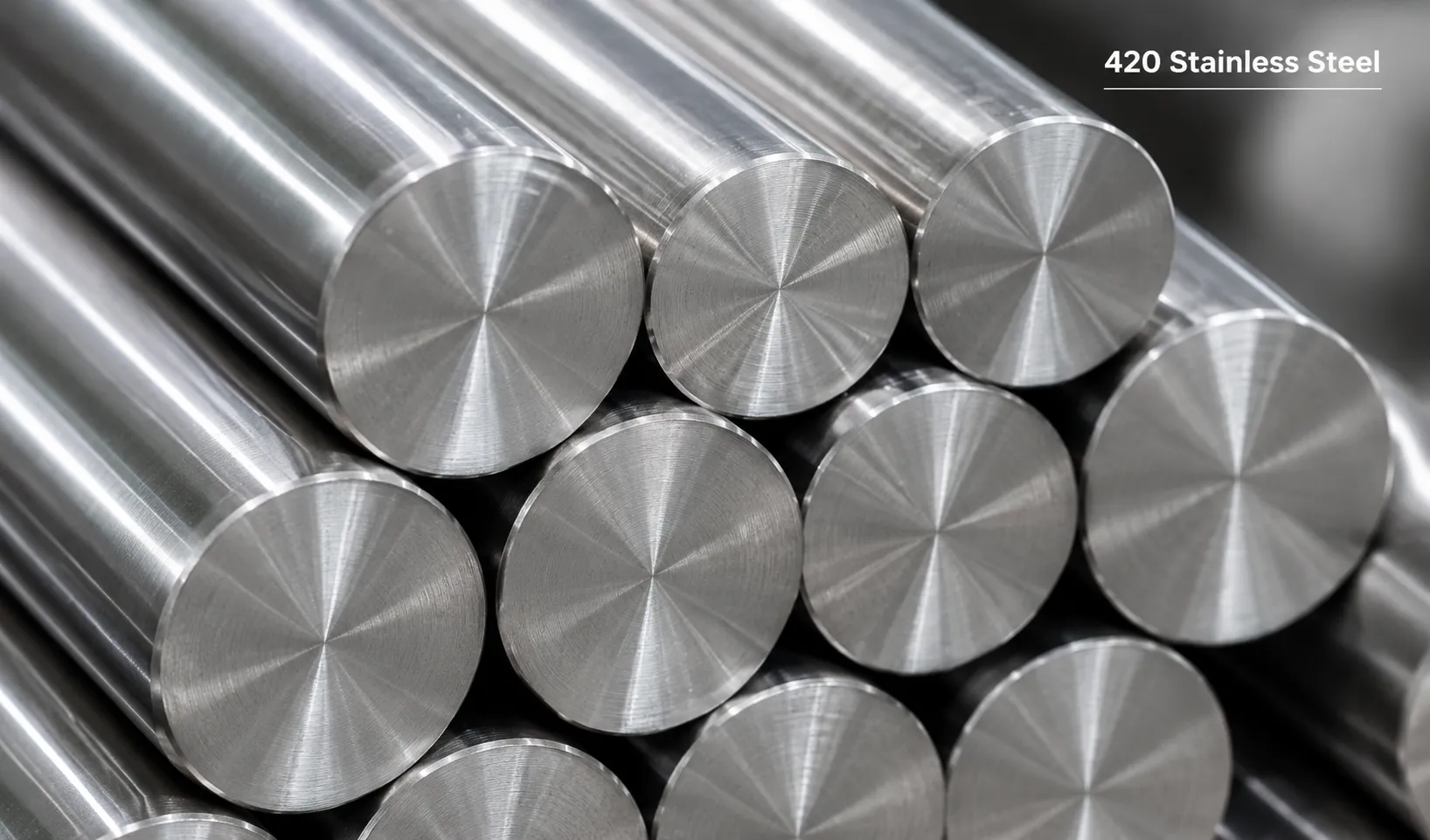
420 Stainless Steel
Martensitic stainless steel
Used in some bearing components, retainers and application-specific constructions. Its role depends on heat treatment and design; it should not be presented as the standard ring material for every stainless bearing.
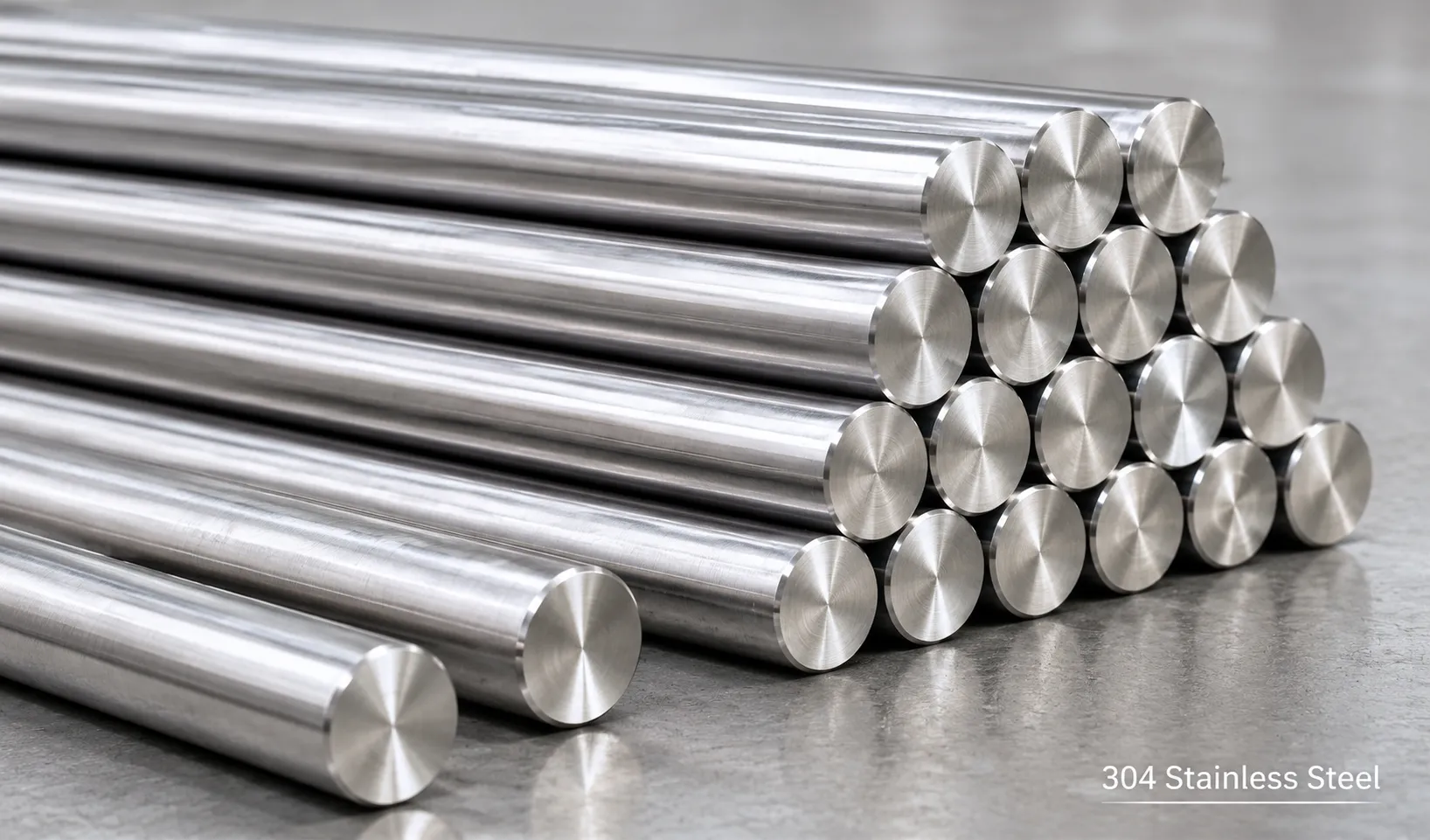
304 Stainless Steel
Austenitic stainless steel
Used where corrosion resistance and formability are important, commonly for shields, cages, retainers or other non-raceway components. Its lower hardness means it is not normally a direct substitute for hardened 440C-type raceways in higher-load or higher-speed duty.
Do not assume that 304, 420 and 440C are freely selectable for every model. Confirm the complete component stack and the rating for the finished bearing construction.
Material system comparison
Stainless Steel vs Bearing Steel
Stainless steel solves an environmental requirement; it is not automatically the higher-performance choice in every machine.
Selection point
Stainless Steel Bearings
Bearing Steel Bearings
Corrosion resistance
Improved for moisture and corrosion-sensitive environments; still grade- and condition-dependent.
Limited; intended for dry service with suitable lubricant and storage protection.
Hardness / wear
Depends strongly on grade and heat treatment. 440C-type grades are chosen when raceway hardness matters.
High hardness and established wear performance for general bearing duty.
Load capability
Must be confirmed for the actual stainless grade and bearing design; do not transfer bearing-steel ratings automatically.
Often the practical reference for demanding loads in dry industrial service.
Speed
Permissible speed may be lower than an equivalent bearing-steel configuration. Confirm the actual stainless grade, heat treatment, closure, cage, lubricant, fit and temperature.
Dry-service bearing-steel designs usually have established load, fatigue and speed data for general industrial duty.
Environment
Humidity, condensation, cleaning, water splash or corrosion-sensitive equipment.
Dry, protected industrial environments.
Cost
Normally higher because material, processing and configuration controls differ.
Usually more economical for standard dry-service requirements.
Typical application
Clean equipment, instruments, humid machinery and corrosion-sensitive assemblies.
Motors, gearboxes and general machinery in controlled dry conditions.
Material grade is one input. Exposure path, closure, lubricant and storage determine whether the complete bearing system remains protected.
Humidity & condensation
Repeated wet/dry cycles can attack rings, balls and interfaces even without continuous water contact.
Splash & washdown
Direct water, splash and washdown are different duties. Closure, grease and cleaning method must be reviewed together.
Dust & smoke particles
Dry particles are primarily a contamination and sealing problem; stainless steel alone does not keep them out of the raceway.
Fumes & chemical vapors
Reactive gases and corrosive fumes are a material-compatibility problem. Standard 440C-type stainless may not be sufficient.
Salt & aggressive media
Saltwater, chlorides and aggressive chemicals can cause localized attack and require a separate material review.
Lubrication, storage & temperature
Grease condition, packaging, fingerprints, temperature cycles and surface damage can change corrosion performance before or during service.
Dry conventional industrial serviceBearing steel may be more practical.
Humidity, water splash or washdownStainless construction often makes sense after closure and lubricant review.
Saltwater, aggressive chemicals or reactive gasesStandard stainless may not be sufficient; review the actual medium and material system.
Contamination and grease control
Closure Options
Choose the closure after defining contamination, grease retention, running resistance, moisture and chemical compatibility.
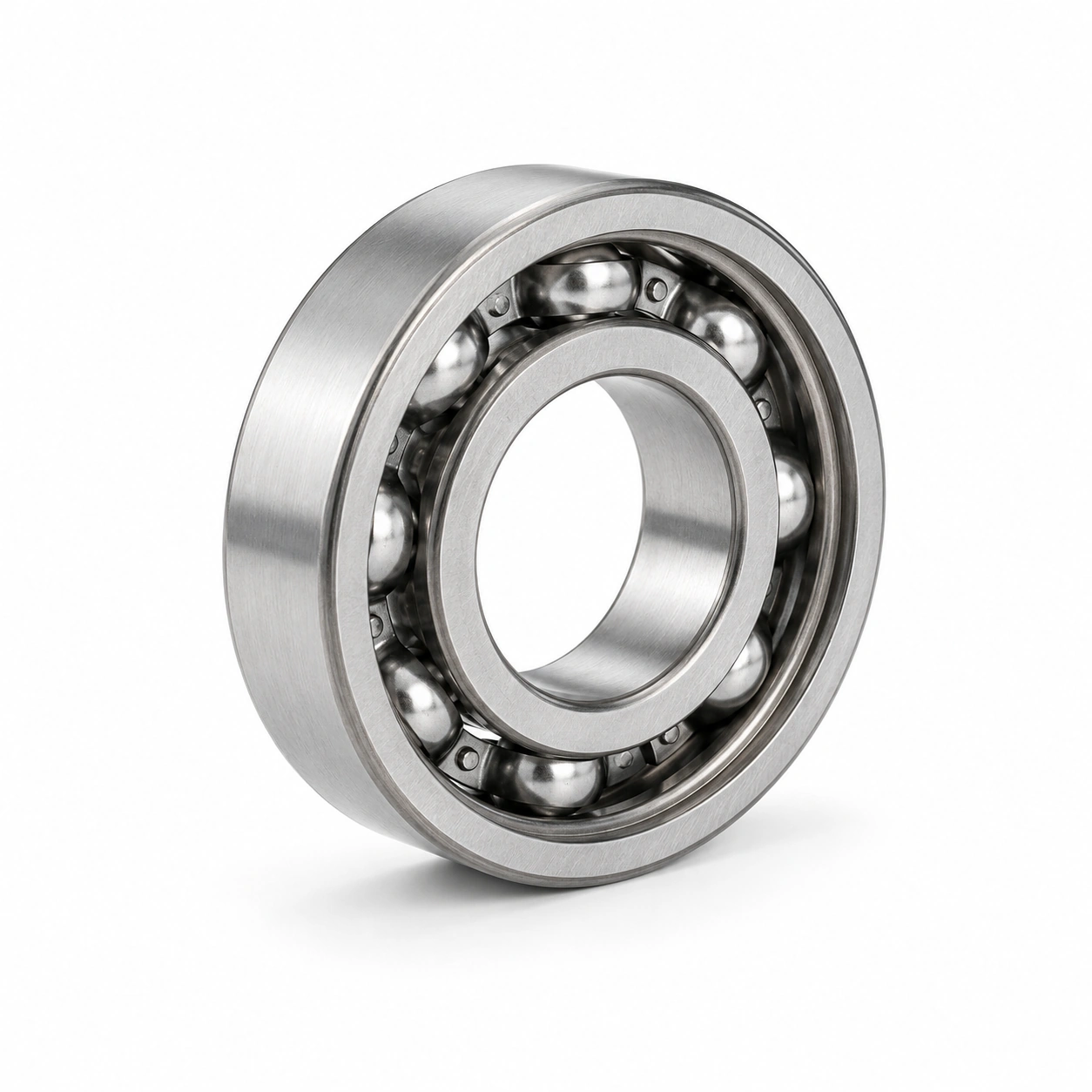
Open
No shield or seal
Lowest closure drag and direct lubricant access, but little protection from moisture or contamination at the raceway.
Clean or controlled environment
External contamination control required
Direct lubrication access
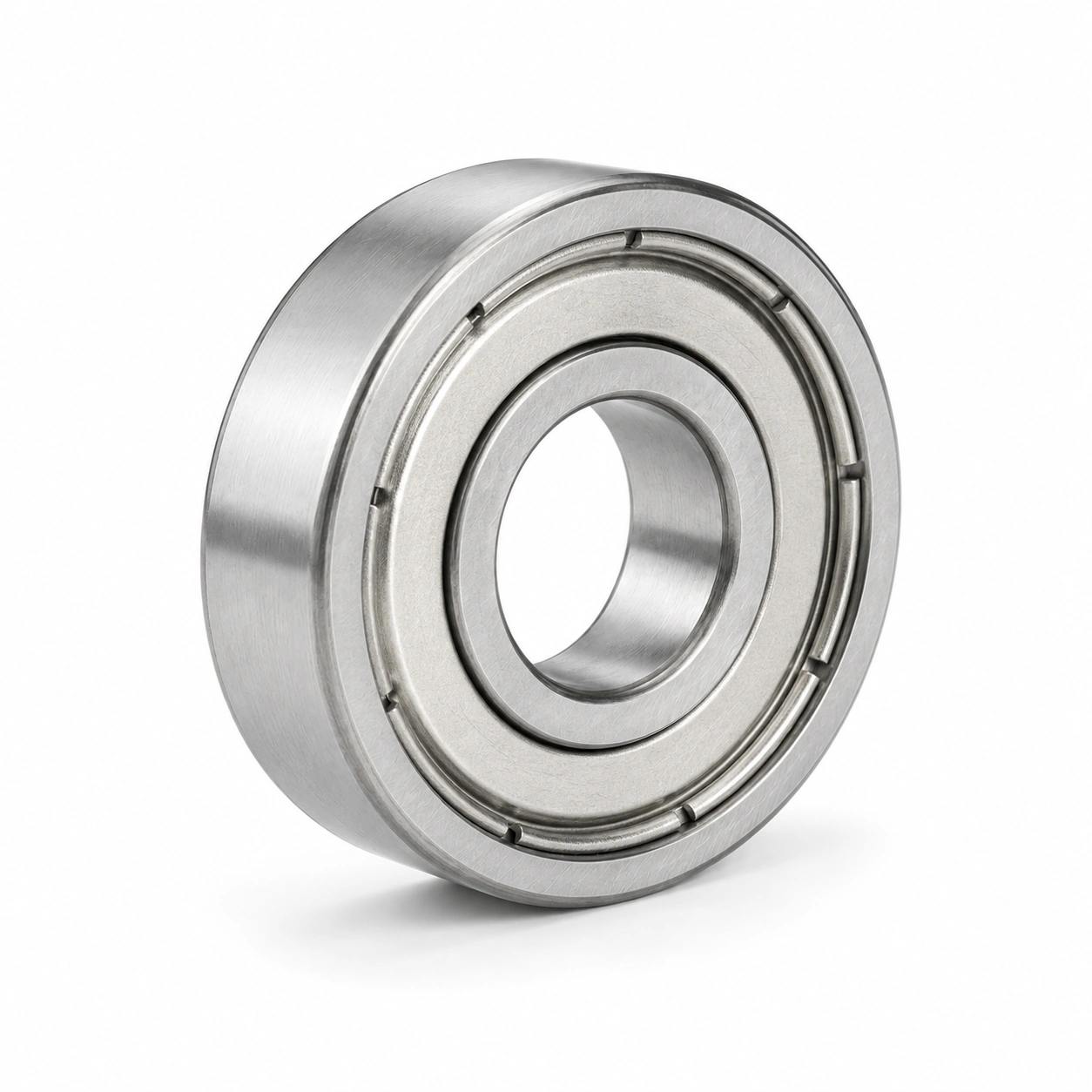
ZZ / Metal Shield
Non-contact metal shields
Helps retain grease and exclude larger particles with lower running resistance than a contacting rubber seal.
Grease retention
Particle exclusion
Lower drag than contact rubber seals
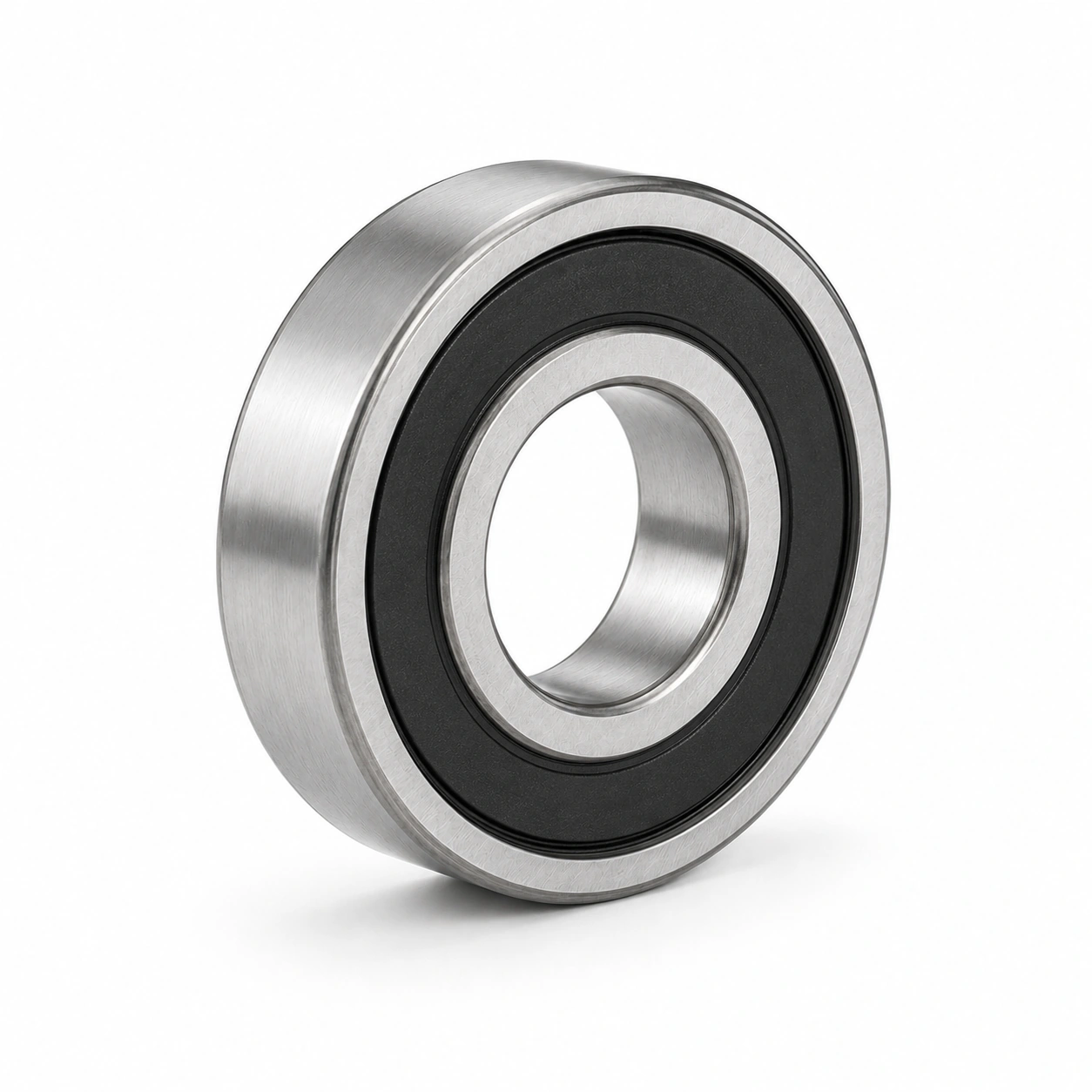
2RS / Rubber Seal
Contact or low-contact seals
Provides stronger moisture and contamination protection with improved grease retention, but adds seal drag and can reduce permissible speed.
Moisture and debris control
Improved grease retention
Seal drag and compatibility review
Closure selection does not determine the stainless grade. Confirm the ring, ball, cage, shield or seal materials for the selected suffix and application.
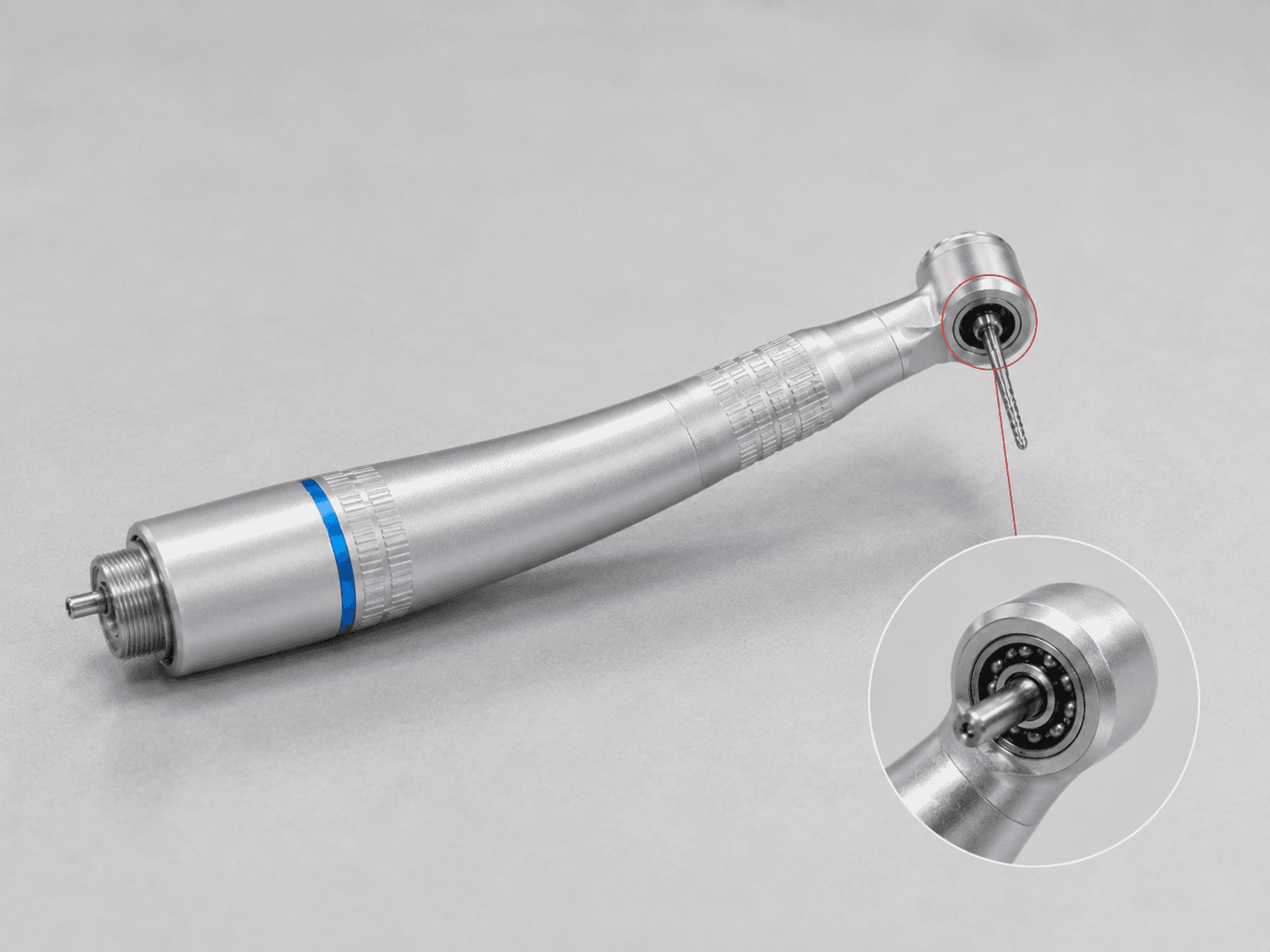
Exposure reasons by application
Stainless Steel Bearing Applications
Each application still requires confirmation of actual moisture, cleaning, chemical, load, speed and lubricant conditions.
Use the family page that matches the governing geometry or environment. Stainless Steel Bearings remains a Products-level family, not a child of Miniature Ball Bearings.
They resist corrosion better than conventional bearing steel, but they are not completely rust-proof. Grade, salt, chemicals, moisture, temperature, lubricant, storage and surface condition all affect the result.
Send Your Stainless Steel Bearing Requirements
Provide the model or dimensions, operating environment, stainless grade preference and closure. LUMI can review the configuration against the application before quotation.