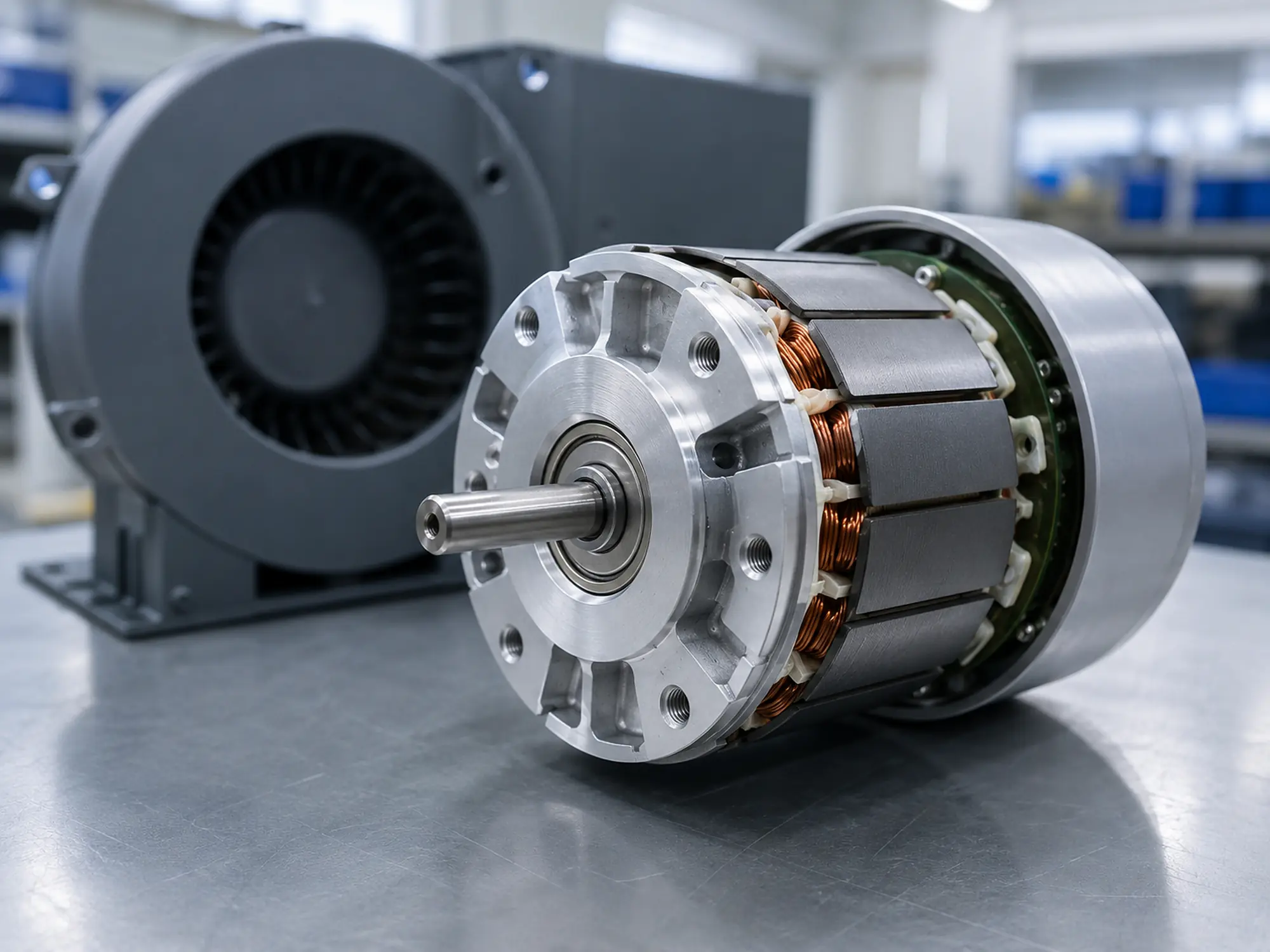
A miniature bearing can run quietly during inspection but become noticeably noisier after it is installed into a motor.
For small electric motors, BLDC motors, gear motors and other precision assemblies, this is a common engineering problem.
The first reaction is often:
“Is there something wrong with the bearing?”
Sometimes there is.
But in many cases, bearing noise after installation is not caused by the bearing alone.
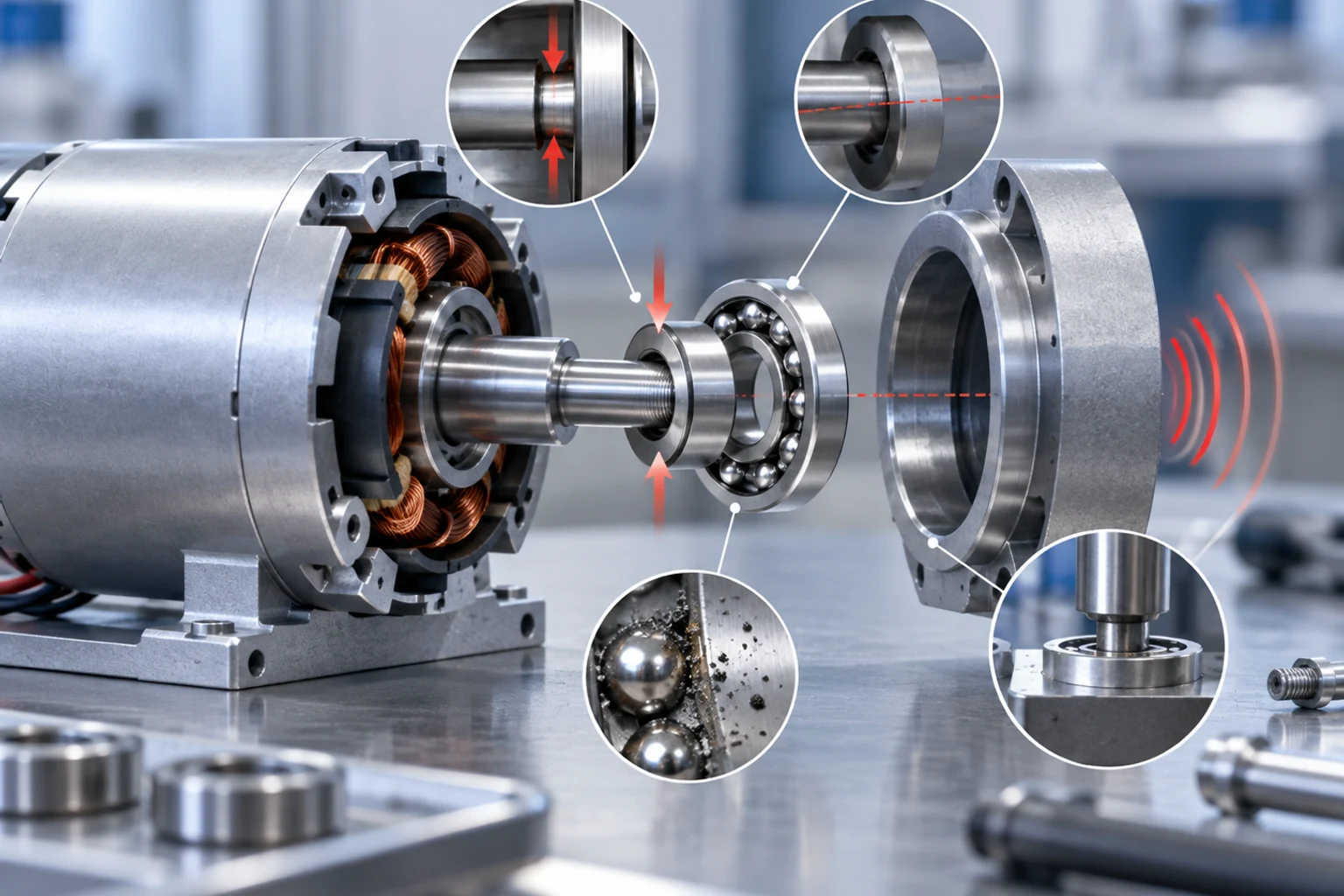
The shaft fit, housing fit, assembly force, alignment, internal clearance and even the surrounding motor structure can change how a small deep groove ball bearing operates after mounting.
For OEM engineers and bearing buyers, understanding this difference is important before changing bearing suppliers or simply specifying a higher precision grade.
Here are five common reasons why a small motor bearing becomes noisy after assembly.
1. Excessive Interference Fit Reduces Bearing Internal Clearance
One of the most common causes of electric motor bearing noise after installation is excessive interference between the bearing and the shaft or housing.
When the bearing inner ring is pressed tightly onto a shaft, the inner ring expands slightly.
When the outer ring is pressed tightly into a housing, the outer ring may contract.
Both changes affect the bearing's actual operating clearance.
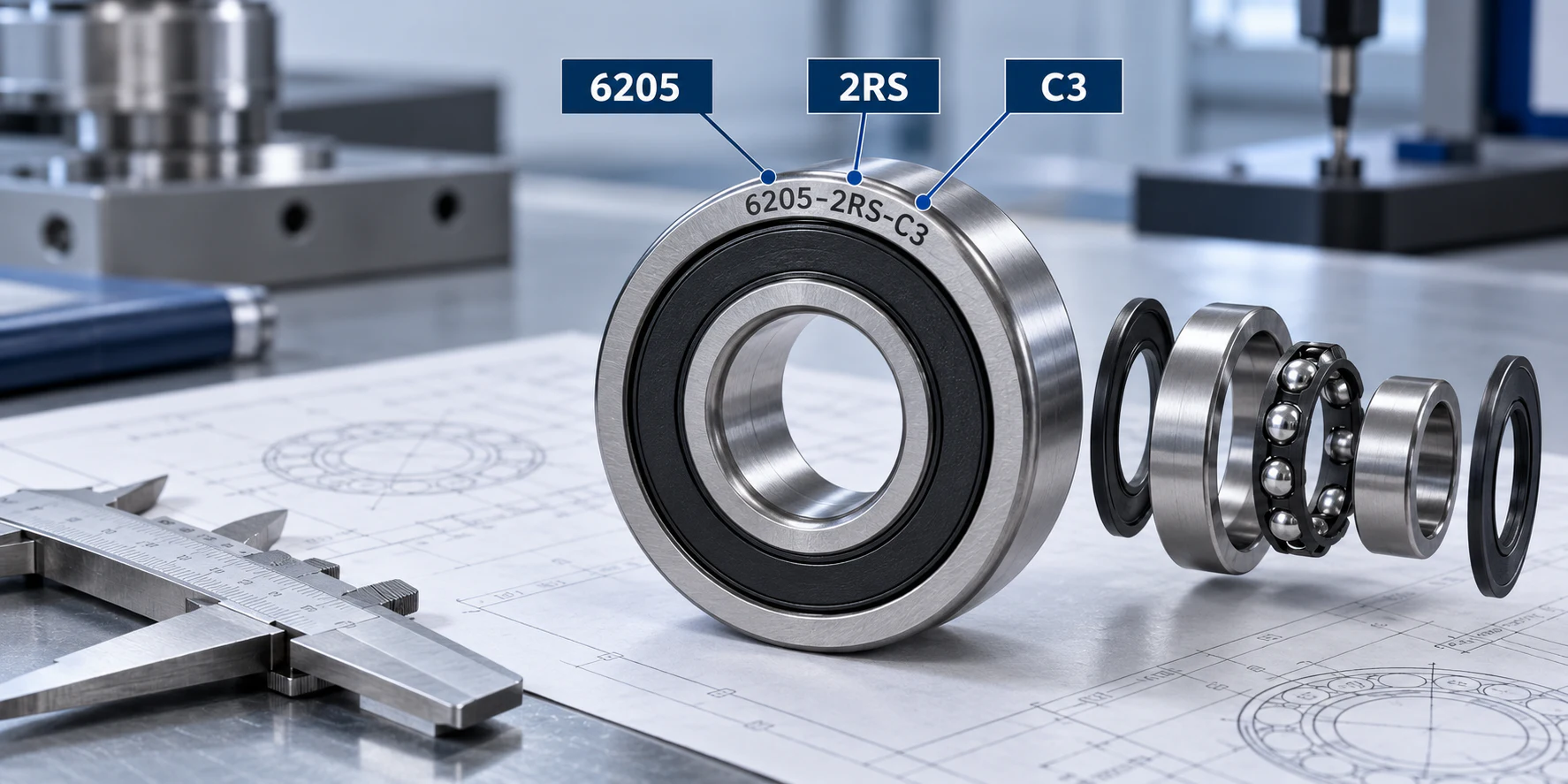
This means a bearing specified as CN before installation does not necessarily maintain the same internal clearance after assembly.
If too much clearance is removed, the bearing may operate with excessive preload.
Possible symptoms include:
- increased running torque;
- higher temperature;
- abnormal vibration;
- higher-frequency bearing noise;
- reduced bearing life.
This is why simply asking:
“Should I use CN or C3?”
is often not enough.
The better engineering sequence is:
shaft tolerance → housing tolerance → interference fit → installed clearance → operating clearance
For miniature motor applications, even small dimensional changes can have a noticeable effect because the bearing itself is very small.
Example
Consider deep groove ball bearings for electric motors mounted on a motor shaft.
If the motor designer increases shaft diameter to prevent inner-ring creep, the stronger interference fit may reduce radial internal clearance.
A bearing that was quiet during free-running inspection may therefore sound different after it is pressed onto the shaft.
Changing from CN to C3 may sometimes help, but the fit should be checked first.
2. The Shaft and Housing Are Not Perfectly Aligned
A bearing is designed to rotate around a controlled axis.
If the motor shaft, bearing seat or housing is misaligned, the bearing may be forced to operate under an uneven load.
This can create additional vibration and noise.
Common causes include:
- shaft runout;
- poor housing concentricity;
- incorrect shoulder geometry;
- two bearing seats that are not coaxial;
- deformed plastic or aluminum motor housings;
- inaccurate machining.
This issue is especially important in small electric motors using two miniature bearings.
If the two bearing positions are not aligned correctly, each bearing can be individually acceptable while the complete motor still produces excessive vibration.
In this situation, replacing the bearing with a higher ABEC grade may not solve the problem.
The mounting geometry must also be checked.
3. Assembly Force Is Applied Through the Wrong Bearing Ring
Another frequent cause of miniature bearing noise after installation is incorrect press-fitting.
During assembly, mounting force should normally be applied to the ring that has the interference fit.
For example:
If the bearing is being pressed onto a shaft through the inner ring, the installation force should be transmitted through the inner ring.
The force should not pass from:
outer ring → balls → inner ring
because this can load the rolling elements and raceways during assembly.
For small bearings, even minor raceway damage may later appear as:
- clicking;
- rough running;
- vibration;
- abnormal motor noise;
- reduced service life.
The bearing may still rotate, so the damage is not always visible during production.
This is one reason why OEM manufacturers should control not only the bearing specification but also the bearing installation process.
Press tools, fixtures and assembly force should all be considered part of the motor's bearing system.
4. Contamination Enters the Bearing During Motor Assembly
Miniature ball bearings are particularly sensitive to contamination.
Very small particles can interfere with the contact between the rolling elements and raceways.
Potential contamination during motor assembly includes:
- metal particles;
- machining debris;
- plastic dust;
- adhesive residue;
- fibers;
- grease contamination;
- particles from the assembly environment.
This is especially relevant for open bearings.
ZZ shielded bearings provide some protection against larger external particles, while 2RS sealed bearings generally provide stronger contamination protection.
However, the correct seal type depends on the motor's speed, friction requirements and operating environment.
A bearing that passes noise inspection before assembly may become noisier if contamination enters during motor production.
For this reason, when investigating motor bearing noise, engineers should compare:
bearing before assembly vs. bearing after assembly
rather than assuming that both conditions are identical.
5. Axial Preload or Motor Structure Changes the Bearing's Operating Condition
Small motors often contain several components that can introduce axial force into the bearing system.
Examples include:
- wave washers;
- springs;
- rotor magnetic force;
- shaft shoulders;
- retaining rings;
- end caps;
- thermal expansion.
A small amount of controlled preload can sometimes improve shaft stability.
Too much preload, however, can increase friction, temperature and bearing noise.
The surrounding motor structure can also amplify certain vibration frequencies.
This explains why the same miniature bearing may sound quiet in one motor design but noticeably louder in another.
The bearing cannot always be evaluated separately from the motor.
A more useful question is:
How does this bearing behave inside the actual motor assembly?
Bearing Noise Is Not the Same as Bearing Precision
Another common misunderstanding is to treat higher bearing precision as the automatic solution to motor noise.
For example, an OEM may move from ABEC-3 to ABEC-5 or ABEC-7 expecting the motor to become quieter.
But dimensional precision and vibration performance are not exactly the same specification.
| Factor | What It Affects |
|---|---|
| Dimensional precision | Shaft accuracy and rotational precision |
| Radial internal clearance | Installed preload and operating clearance |
| Vibration level | Motor vibration and acoustic performance |
| Lubricant | Torque, noise, temperature and life |
| Bearing fit | Installed internal clearance |
| Assembly process | Raceway condition and alignment |
For low-noise electric motors, focusing only on an ABEC grade may therefore miss the actual cause of the problem.
How Should OEM Engineers Diagnose Motor Bearing Noise?
If a bearing becomes noisy only after installation, it is useful to isolate the variables instead of immediately changing suppliers.
Step 1 — Test the bearing before installation
Record the bearing's noise, vibration and rotational smoothness.
Step 2 — Measure the shaft and housing
Check diameter, roundness, concentricity and tolerance.
Step 3 — Review the interference fit
Determine how much radial internal clearance may be lost after installation.
Step 4 — Check the mounting process
Confirm that press force is applied through the correct ring.
Step 5 — Compare assembled motor vibration
Determine whether vibration changes after the bearing is installed.
Step 6 — Review axial preload and lubrication
Make sure the bearing is not operating under excessive preload or unsuitable lubrication conditions.
This process makes it much easier to determine whether the issue comes from the bearing itself, the mounting conditions or the complete motor system.
CN or C3: Which Clearance Is Better for a Small Motor?
There is no universal answer.
CN may be suitable for one motor design while C3 is more appropriate for another.
The correct choice depends on factors such as:
- shaft interference;
- housing interference;
- operating temperature;
- rotational speed;
- material expansion;
- axial preload;
- required vibration level.
This is why bearing internal clearance for small motors should normally be selected together with shaft and housing fit, rather than as an isolated specification.
What Information Should You Give a Bearing Supplier?
When sourcing a miniature bearing for an electric motor, providing only a bearing model is often not enough.
For example:
685ZZ
identifies the basic bearing size and shield configuration, but it does not fully describe the operating requirement.
For a more accurate recommendation, OEM buyers can provide:
- bearing model;
- motor type;
- operating speed;
- shaft tolerance;
- housing tolerance;
- operating temperature;
- expected lifetime;
- noise or vibration requirement;
- lubricant requirement;
- radial and axial load;
- current bearing problem.
The more accurately the application is defined, the easier it is to select the appropriate bearing specification.
FAQ
Why is my motor bearing quiet before installation but noisy afterwards?
Installation changes the bearing's operating conditions. Interference fit, alignment, axial preload, contamination or incorrect mounting force can all increase bearing noise after assembly.
Can a tight shaft fit make a bearing noisy?
Yes. Excessive shaft interference can expand the bearing inner ring and reduce radial internal clearance, potentially increasing torque, vibration and noise.
Will C3 clearance reduce motor bearing noise?
Not necessarily. C3 provides greater initial radial internal clearance than CN, but whether it is appropriate depends on shaft fit, housing fit, temperature and operating conditions.
Does a higher ABEC rating mean a quieter motor bearing?
Not automatically. ABEC primarily relates to dimensional and rotational tolerances. Motor noise is also affected by bearing vibration grade, internal clearance, lubrication, installation and motor design.
Can bearing installation damage cause motor vibration?
Yes. If mounting force passes through the rolling elements, the raceway can be damaged. The bearing may still rotate but can develop abnormal vibration or noise during operation.
Conclusion
When a small motor bearing becomes noisy after assembly, replacing the bearing is not always the first step.
The complete system should be reviewed:
bearing + shaft + housing + fit + clearance + lubricant + assembly process
For miniature electric motors, small changes in these conditions can significantly affect vibration, torque and acoustic performance.
A bearing that performs well in free-running inspection still needs to be matched correctly to the final motor design.
For OEM projects, defining the application and installation conditions before selecting the final bearing specification can reduce repeated testing and make batch performance more consistent.
Selecting Bearings for a Small Motor Project?
If you are evaluating miniature bearings for an electric motor, BLDC motor, gearbox or other precision application, send us the bearing model, speed, application and current operating issue.
Our engineering team can help review the bearing specification, clearance, lubrication and fit requirements before sample testing.