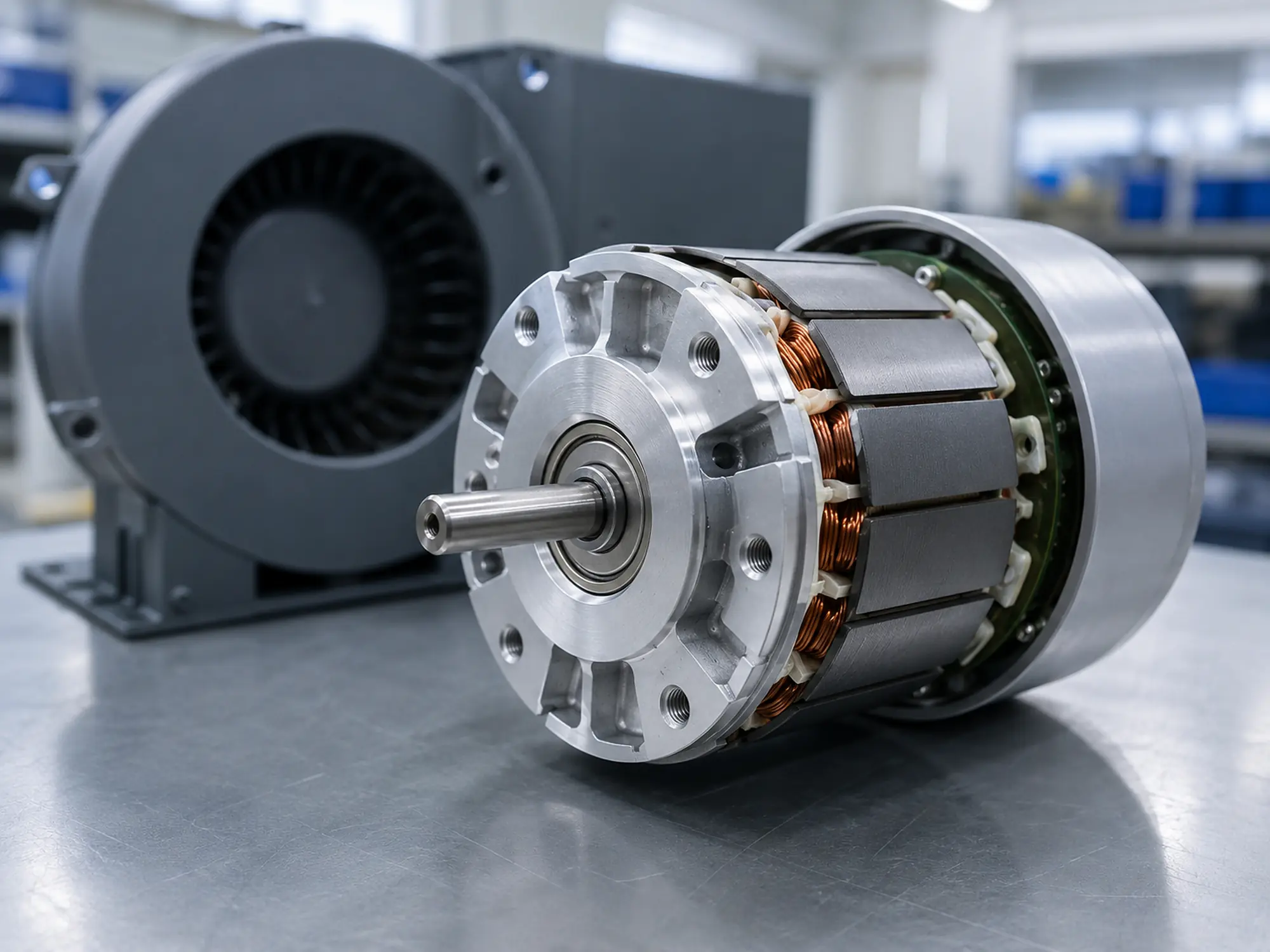
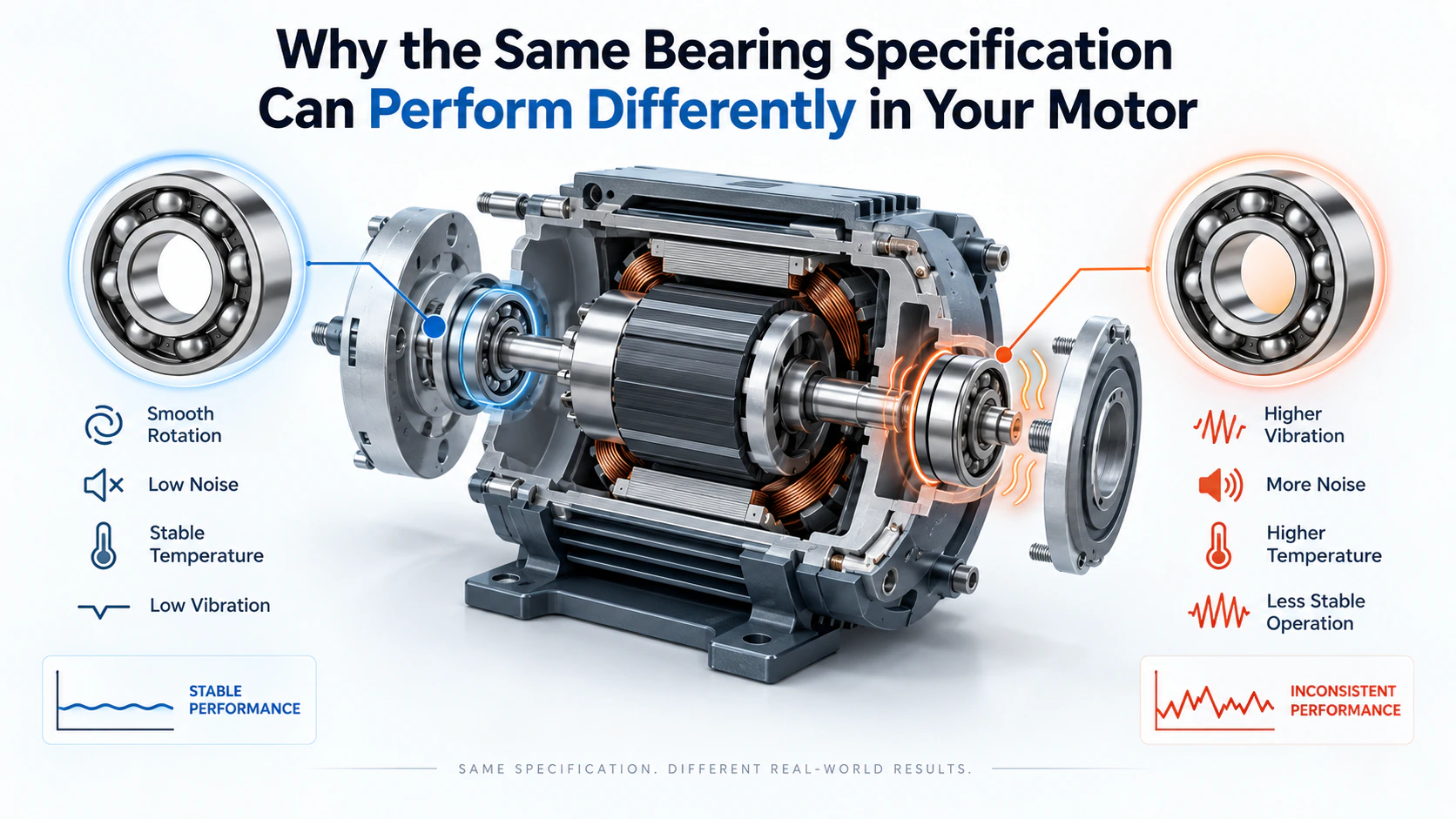
Two bearings can have the same dimensions, the same seal type, and even the same precision grade — yet perform very differently once installed in a motor.
One runs quietly and smoothly.
The other creates more vibration, higher temperature, or unstable noise after several hours of operation.
For motor manufacturers, this is a common sourcing problem.
On paper, both bearings may look identical.
In actual operation, they are not.
That is because bearing performance is determined by much more than the model number printed on the box.
The Same Bearing Number Does Not Mean the Same Running Performance
Take a common motor bearing such as 608ZZ, 6201ZZ, or 685ZZ.
When comparing suppliers, buyers usually start with visible specifications:
- Bearing dimensions
- Material
- ABEC or precision grade
- Internal clearance
- Shield or seal type
- Rated speed
- Load rating
These specifications are important.
But they only describe part of the bearing.
For electric motors, especially applications sensitive to noise, vibration, temperature, or high-speed operation, several less visible factors can have a major impact on actual performance.
1. Raceway Quality Can Change Noise and Vibration
The balls inside a bearing continuously travel along the inner and outer raceways.
Even very small differences in raceway surface finish, waviness, roundness, or grinding quality can affect how smoothly the bearing rotates.
A bearing may still meet the basic dimensional tolerance required by the drawing while producing noticeably different vibration characteristics.
This is especially important in:
- Small electric motors
- BLDC motors
- Cooling fans
- Power tools
- Drones
- Servo systems
- Medical equipment
- Precision gearboxes
In these applications, dimensional accuracy alone is not enough.
The quality of the running surface matters just as much.
2. Internal Clearance Has to Match the Actual Motor
Internal clearance describes the amount of internal movement available between the bearing rings and rolling elements before installation.
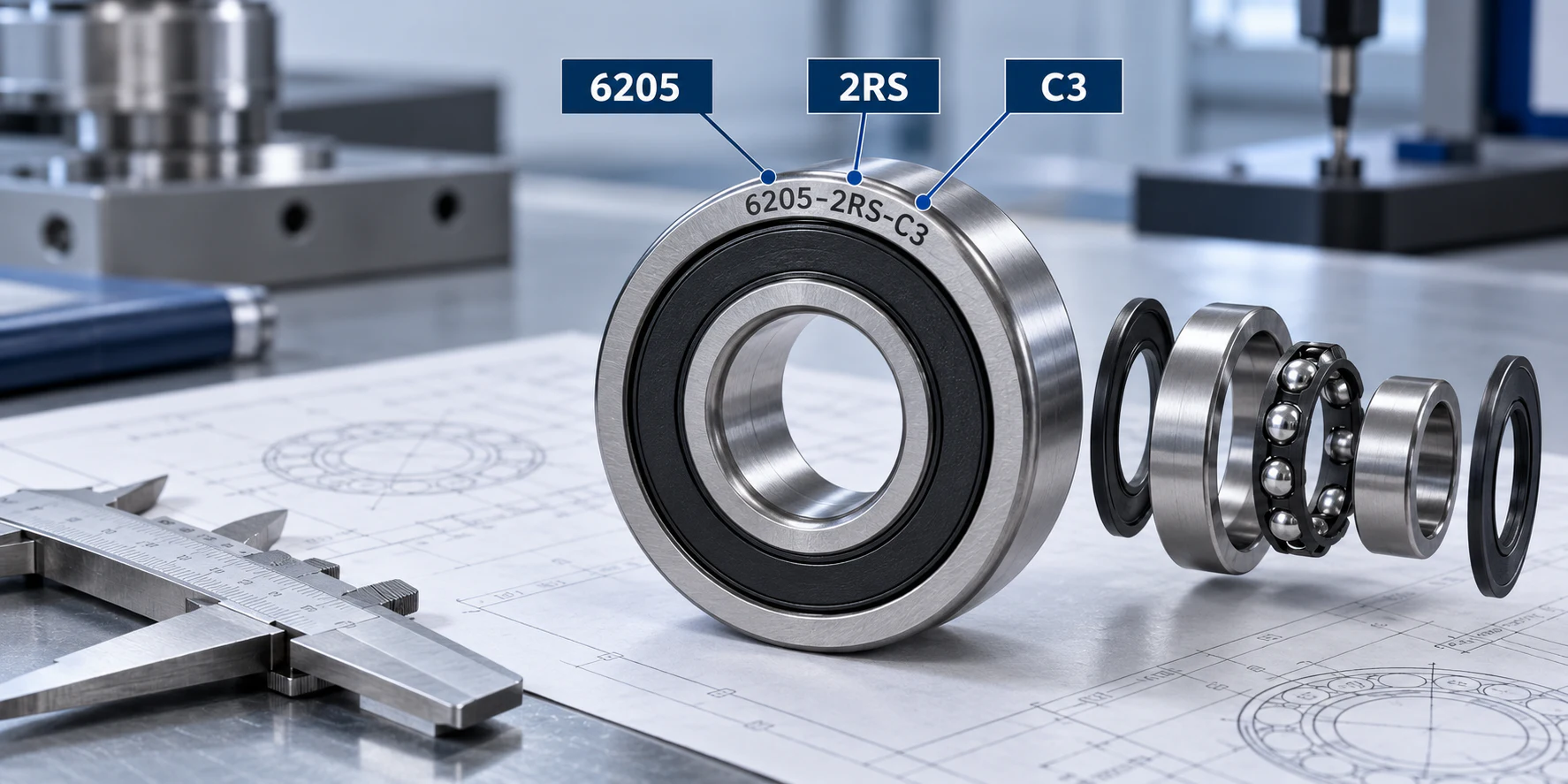
Common clearance classes include:
- CN
- C3
- C4
However, the clearance measured before installation is not necessarily the clearance that remains once the bearing is mounted inside the motor.
Several factors can reduce operating clearance:
- Tight shaft fit
- Tight housing fit
- Temperature difference between inner and outer rings
- Shaft expansion
- Housing deformation
If the remaining operating clearance becomes too small, the bearing may generate more friction and heat.
If the clearance is too large, vibration and noise may increase.
This is why simply copying the clearance specification from another motor does not always guarantee the same result.
The shaft, housing, operating temperature, and fitting tolerance all need to be considered together.
3. Grease Type and Grease Quantity Matter More Than Many Buyers Expect
Two bearings can have exactly the same model number but use completely different grease.
This can significantly change:
- Starting torque
- Running torque
- Noise
- Temperature rise
- High-speed performance
- Low-temperature performance
- Bearing life
Grease quantity also matters.
Too much grease may increase resistance and temperature.
Too little grease may reduce lubrication life.
For general industrial applications, standard grease may be sufficient.
But for high-speed motors, low-noise motors, high-temperature equipment, or applications operating continuously for long periods, lubrication selection becomes much more important.
That is why a motor manufacturer should not only ask:
“What grease do you use?”
A better question is:
“Is this grease suitable for my speed, temperature, noise requirement, and duty cycle?”
4. Noise Grade Is Not Fully Defined by ABEC Grade
One common misunderstanding in bearing purchasing is that a higher ABEC grade automatically means a quieter bearing.
That is not necessarily true.
ABEC grades mainly relate to dimensional and rotational tolerances.
Noise and vibration performance depend on additional factors such as:
- Raceway finish
- Ball grade
- Cage quality
- Lubrication
- Cleanliness
- Manufacturing process control
- Vibration screening
For motor applications, suppliers may also classify bearings by vibration and noise levels such as Z2, Z3, Z4 or V2, V3.
A buyer sourcing bearings for a low-noise motor should therefore evaluate both dimensional precision and vibration performance.
5. Small Differences in Seal or Shield Design Can Affect Torque
A bearing marked ZZ, 2RS, or RSR may look straightforward, but different sealing structures can create different friction levels.
For example, contact seals provide better protection against contamination but generally create more friction than non-contact shields.
In a low-speed industrial machine, this difference may not matter much.
In a small high-speed motor, however, additional friction can contribute to:
- Higher temperature
- Increased current consumption
- Lower efficiency
- Reduced maximum speed
The correct sealing structure should therefore match the operating environment rather than being selected only based on habit.
6. Cleanliness Can Affect Bearing Performance
Miniature and small bearings are particularly sensitive to contamination.
Microscopic particles inside the bearing can affect:
- Noise
- Vibration
- Raceway condition
- Lubrication
- Long-term life
For a motor manufacturer, this means that manufacturing cleanliness, assembly environment, washing process, and grease filling control can all influence the final bearing performance.
A bearing may look perfect externally while still behaving differently internally.
This is one reason why consistent manufacturing process control is so important.
7. Motor Installation Can Change the Result Completely
Sometimes the bearing itself is not the only reason for abnormal noise or heating.
The interaction between the bearing and the motor structure also matters.
Common installation-related factors include:
- Shaft concentricity
- Shaft tolerance
- Housing tolerance
- Misalignment
- Excessive interference fit
- Rotor imbalance
- Assembly force
- Preload
- Coupling alignment
For example, a bearing may rotate smoothly during free rotation testing but generate higher vibration after being pressed onto a shaft.
This does not necessarily mean the bearing is defective.
The interference fit may have changed the internal clearance or deformed the bearing rings.
For this reason, the most meaningful bearing test is often not only a standalone bearing test.
It is the performance of the bearing inside the customer's actual motor.
8. Sample Quality and Mass Production Consistency Are Two Different Questions
A sample passing the customer's test is important.
But for an OEM manufacturer, that is only the first step.
The bigger question is:
Will the next 10,000, 50,000, or 100,000 bearings perform the same way?
This is where supplier process control becomes critical.
A reliable supplier should be able to control key variables consistently across production batches, including:
- Raw material
- Raceway processing
- Ball quality
- Internal clearance
- Grease
- Grease quantity
- Noise and vibration
- Cleaning process
- Assembly
- Final inspection
For OEM buyers, consistency is often more important than achieving an unusually good result from a small sample batch.
A perfect sample has little value if the mass-production quality cannot be repeated.
What Should Motor Manufacturers Check When Comparing Bearing Suppliers?
Instead of comparing only the model number and unit price, motor manufacturers should evaluate the bearing based on the actual application.
Before approving a new bearing supplier, it is useful to confirm:
- What is the motor speed?
- What is the normal operating temperature?
- Is the motor sensitive to noise or vibration?
- What are the shaft and housing tolerances?
- Is the bearing continuously running or intermittently operating?
- What lubrication is being used?
- What internal clearance is required?
- What vibration or noise grade is required?
- Is the bearing exposed to dust, moisture, or corrosive conditions?
- How will production consistency be controlled after sample approval?
These questions provide much more useful information than simply asking whether the supplier can produce a certain bearing model.
Bearing Selection Should Be Based on the Application, Not Only the Drawing
For many motor projects, bearing sourcing begins with a drawing.
That is necessary, but it should not end there.
Two bearings can meet the same dimensional specification and still behave differently in the final motor.
The difference may come from lubrication, clearance, vibration control, raceway quality, sealing structure, manufacturing cleanliness, or installation conditions.
For OEM manufacturers, the best bearing is therefore not simply the bearing that matches the drawing.
It is the bearing that delivers stable performance inside the actual application — from the first sample to mass production.
At LUMI Bearing, we work with motor manufacturers and equipment OEMs to select miniature and small deep groove ball bearings based on actual operating conditions, including speed, noise, vibration, temperature, lubrication, clearance, and installation requirements.
If you are evaluating a new bearing supplier or experiencing noise, vibration, or temperature problems in your motor, sharing the bearing model together with the application conditions can usually help identify the right direction much faster.