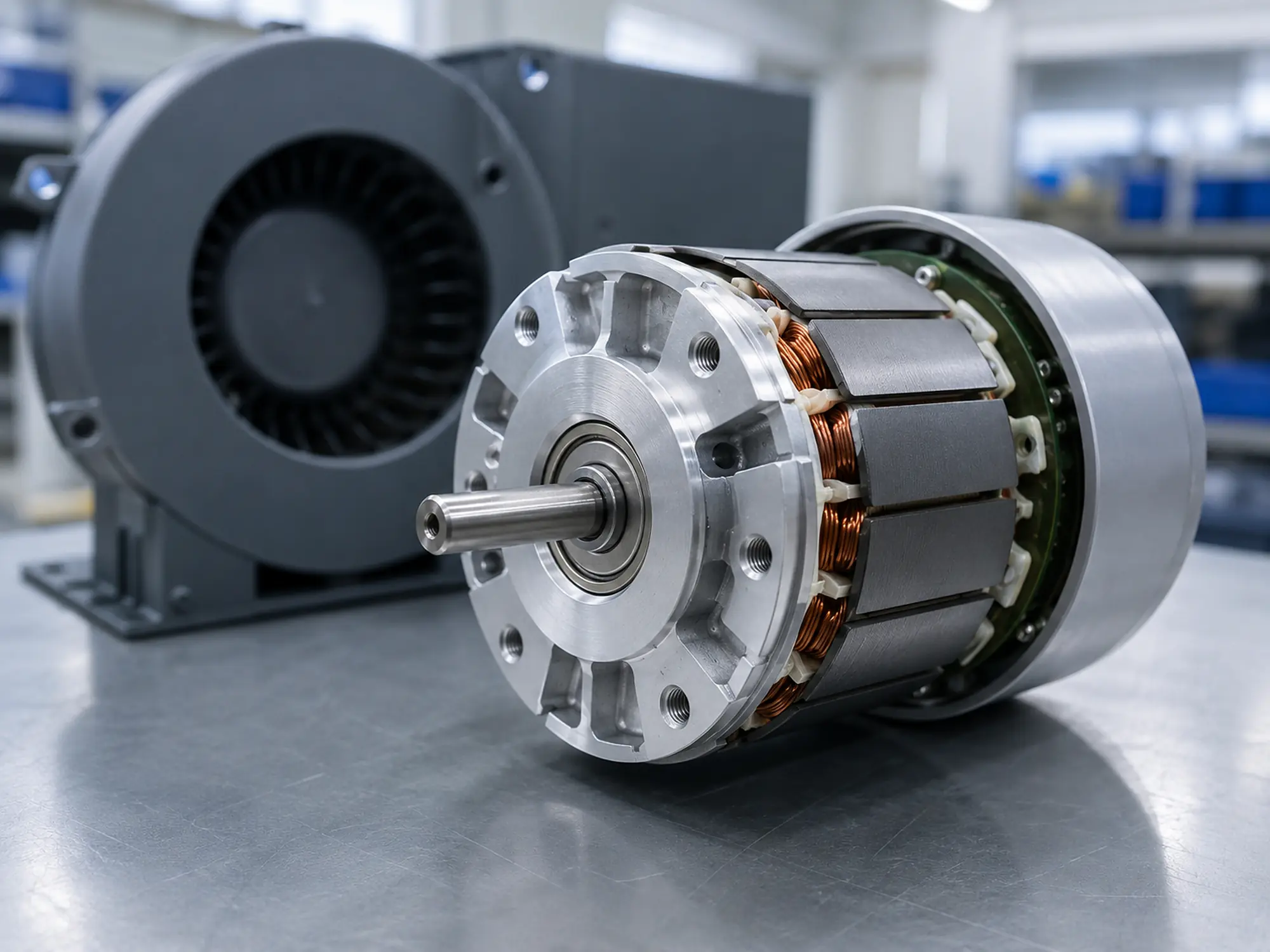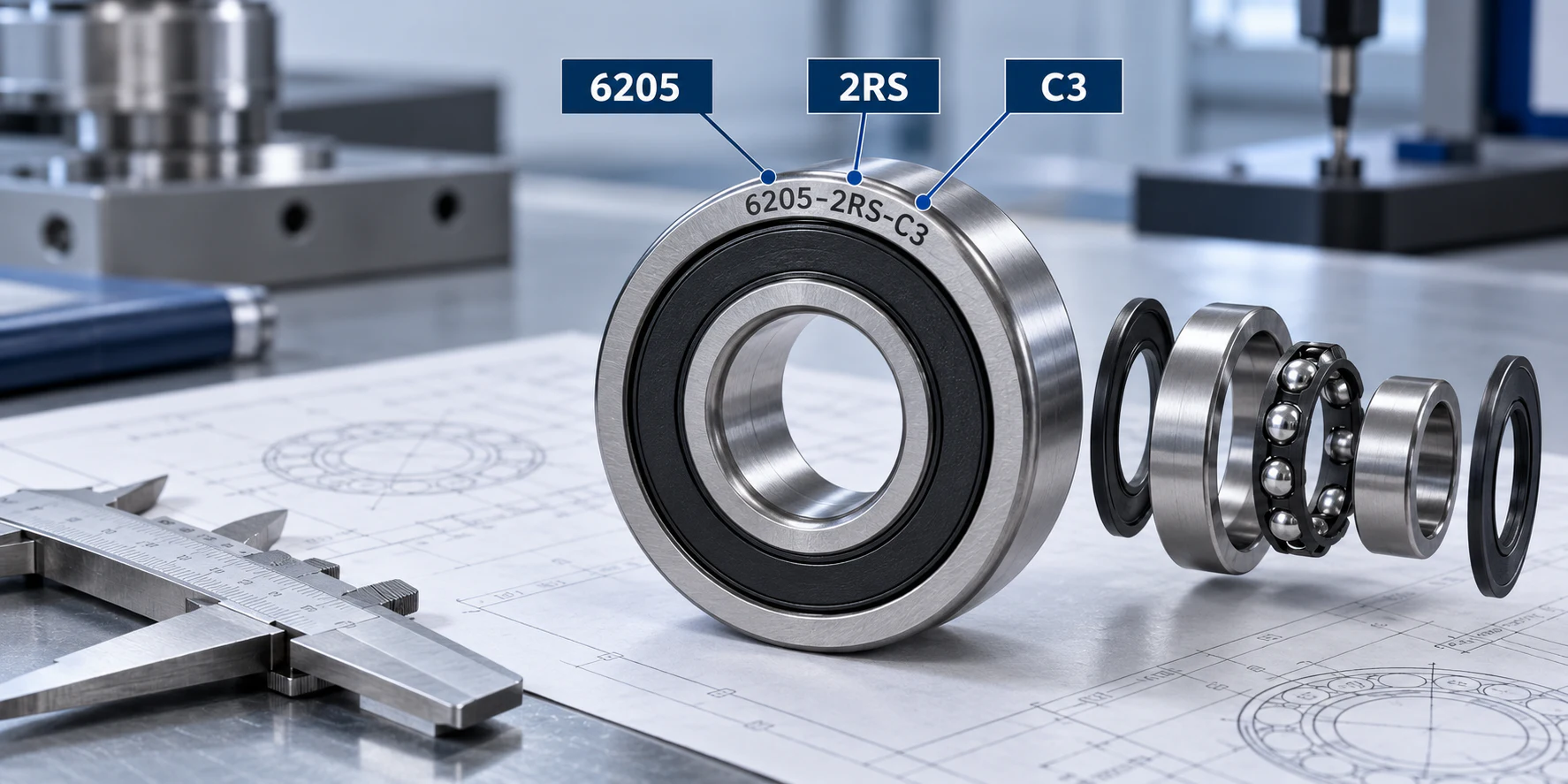
Deep groove ball bearings are designed to operate for thousands or even millions of revolutions.
But in real applications, some bearings fail much earlier than expected.
When this happens, the first assumption is often:
“The bearing quality is bad.”
Sometimes that is true.
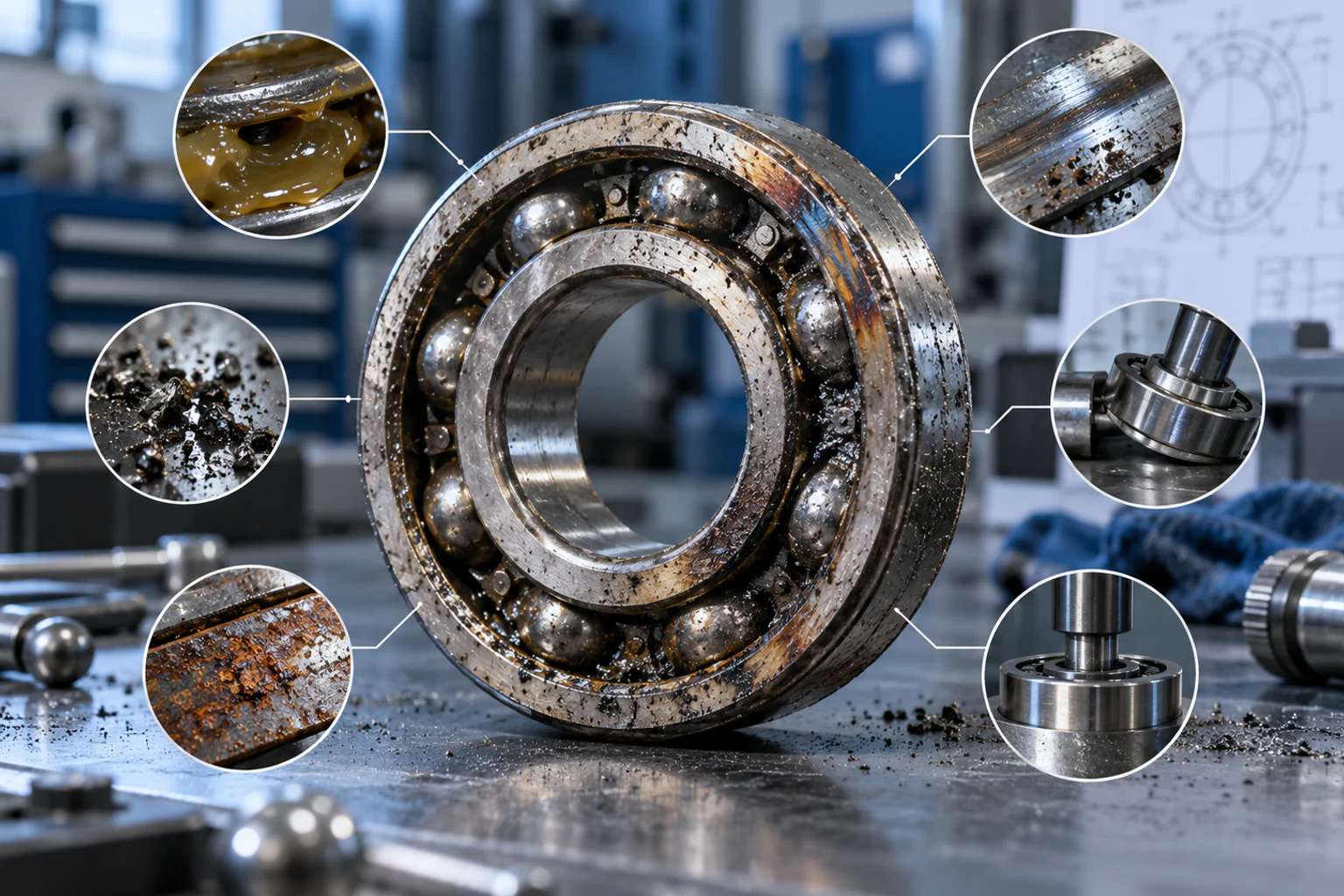
But premature bearing failure is often caused by a combination of factors involving lubrication, installation, contamination, fit, load and operating conditions.
For OEM engineers, maintenance teams and bearing buyers, identifying the real cause of failure is important before simply replacing the bearing with the same model.
A new bearing installed under the same incorrect conditions may fail again.
This guide explains eight common bearing failure causes and the signs engineers should look for during bearing failure analysis.
1. Incorrect or Insufficient Lubrication
Lubrication is one of the most important factors affecting bearing life.
The lubricant creates a protective film between the rolling elements and raceways.
If this film is insufficient, direct metal-to-metal contact can occur.
This may lead to:
- increased friction;
- rising temperature;
- abnormal noise;
- surface wear;
- discoloration;
- premature fatigue.
However, too little grease is not the only problem.
Too much grease can also cause higher running torque and temperature, especially in small or high-speed bearings.
The correct lubrication condition depends on:
- bearing size;
- operating speed;
- load;
- temperature;
- seal type;
- expected service life.
A common mistake is to select a bearing only by model number while ignoring the lubricant specification.
For miniature ball bearings and small electric motors, grease type and grease fill quantity can significantly affect performance.
2. Contamination Inside the Bearing
Contamination is another major cause of premature bearing failure.
Even very small particles can damage the raceway surface.
Common contaminants include:
- metal particles;
- dust;
- fibers;
- sand;
- machining debris;
- water;
- dirty grease;
- assembly residue.
When contamination enters the bearing, particles may pass through the rolling contact area.
This can create small indentations in the raceway.
Over time, these damaged areas may develop into:
- pitting;
- vibration;
- noise;
- surface fatigue.
For miniature bearings, contamination can be especially serious because the rolling elements and raceways are very small.
This is why clean assembly environments, suitable seals and correct storage are important parts of bearing reliability.
3. Incorrect Bearing Fit
The fit between the bearing, shaft and housing directly affects how the bearing operates.
If the fit is too loose, the bearing ring may move or creep relative to the shaft or housing.
Possible results include:
- fretting;
- wear;
- heat generation;
- loss of positioning accuracy.
If the fit is too tight, the bearing's internal clearance may decrease excessively.
This may create:
- increased preload;
- higher torque;
- overheating;
- vibration;
- shorter bearing life.
For this reason, bearing selection should not stop at the bearing model.
The shaft tolerance and housing tolerance should also be defined according to the application.
A bearing that works correctly in one machine may behave differently in another machine if the fit conditions are different.
4. Shaft or Housing Misalignment
Misalignment occurs when the bearing does not operate around the intended rotational axis.
This can be caused by:
- shaft bending;
- poor machining;
- inaccurate bearing seats;
- incorrect housing geometry;
- two bearing positions that are not coaxial;
- assembly deformation.
Misalignment creates uneven loading inside the bearing.
Instead of distributing the load properly across the raceway, the contact may become concentrated in a smaller area.
This can lead to:
- increased vibration;
- abnormal noise;
- uneven raceway wear;
- higher temperature;
- early fatigue.
In applications using two bearings on one shaft, alignment between the two bearing seats is especially important.
Replacing the bearing alone may not solve the problem if the shaft or housing remains misaligned.
5. Excessive Load or Unexpected Impact Load
Every bearing has a designed load capacity.
If the actual operating load exceeds the design condition, bearing life may decrease significantly.
Excessive load can come from:
- incorrect equipment design;
- high belt tension;
- excessive gear force;
- unexpected radial load;
- excessive axial load;
- impact or shock loading.
Impact loads are particularly damaging because they can create permanent indentations in the raceways.
A bearing may appear normal externally but still contain internal damage after an impact.
For OEM applications, engineers should consider not only normal running load but also:
- startup load;
- sudden stopping;
- transportation shock;
- assembly impact;
- abnormal operating conditions.
6. Improper Bearing Installation
Many bearing failures begin during assembly.
Incorrect installation methods can damage the bearing before the machine even starts operating.
One common mistake is applying mounting force through the wrong bearing ring.
For example, when pressing a bearing onto a shaft, force should normally be applied to the inner ring.
If force passes through:
outer ring → balls → inner ring
the rolling elements can create small indentations in the raceways.
This type of damage may later appear as:
- clicking;
- vibration;
- rough rotation;
- increased motor noise.
Other installation problems include:
- hammering the bearing directly;
- installing the bearing at an angle;
- using incorrect tools;
- forcing the bearing past a damaged shaft shoulder;
- contaminating the bearing during assembly.
A good bearing can fail quickly if the installation process is poorly controlled.
7. Corrosion and Moisture Damage
Corrosion occurs when moisture or corrosive substances attack the bearing surface.
This can happen during:
- storage;
- transportation;
- equipment washing;
- outdoor operation;
- high-humidity environments.
Corrosion may begin as small rust spots on the raceway or rolling elements.
These areas create roughness in the rolling contact surface.
As the bearing continues to operate, corrosion damage can develop into:
- noise;
- vibration;
- pitting;
- fatigue failure.
For applications exposed to moisture, engineers may need to consider:
- stainless steel bearings;
- stronger sealing;
- corrosion-resistant grease;
- improved packaging;
- controlled storage conditions.
Selecting the correct bearing material is only one part of corrosion prevention.
8. Electrical Damage
Electrical current passing through a bearing can damage the raceway surface.
This problem is commonly associated with electric motors and variable-frequency drive systems.
When electrical current passes through the rolling contact, small electrical discharges may occur.
Over time, this can produce surface damage such as:
- electrical pitting;
- frosting;
- fluting patterns;
- increased vibration;
- abnormal noise.
Electrical bearing damage may initially look similar to mechanical wear.
This is why the application should be reviewed carefully during bearing failure analysis.
Potential solutions may involve:
- electrical grounding;
- insulated bearings;
- ceramic rolling elements;
- improved motor design.
The appropriate solution depends on the source and path of the electrical current.
Common Bearing Failure Symptoms
Before a bearing completely fails, it often provides warning signs.
| Symptom | Possible Causes |
|---|---|
| Increasing noise | Contamination, lubrication, damage, misalignment |
| Rising temperature | Excessive preload, lubrication, overload |
| Increased vibration | Raceway damage, misalignment, contamination |
| Rough rotation | Contamination, corrosion, installation damage |
| Grease leakage | Overfilling, seal damage, excessive temperature |
| Rust | Moisture or poor storage |
| Raceway pitting | Fatigue, contamination, electrical damage |
| Uneven wear | Misalignment or incorrect load |
One symptom alone is usually not enough to identify the exact cause.
A proper bearing failure analysis should consider both the bearing condition and the complete machine.
Why Replacing the Bearing May Not Solve the Problem
When a bearing fails, replacing it is necessary.
But if the root cause is not corrected, the replacement bearing may fail in the same way.
For example:
If the real problem is excessive shaft interference, installing another bearing of the same type may reproduce the same overheating problem.
If contamination is entering from the assembly environment, changing bearing brands may not solve the issue.
If the housing is misaligned, a higher-precision bearing may still fail.
This is why bearing failure should be treated as a system problem.
The complete system includes:
bearing + shaft + housing + lubricant + load + installation + environment
How to Perform a Basic Bearing Failure Analysis
A useful troubleshooting process is:
Step 1 — Record the failure symptoms
Document:
- noise;
- vibration;
- temperature;
- running time;
- operating speed.
Step 2 — Inspect the bearing exterior
Check:
- seals;
- shields;
- corrosion;
- grease leakage;
- discoloration.
Step 3 — Inspect the raceway and balls
Look for:
- pitting;
- scratches;
- indentations;
- abnormal wear;
- electrical marks.
Step 4 — Review lubrication
Confirm:
- grease type;
- grease quantity;
- temperature range;
- compatibility.
Step 5 — Measure shaft and housing
Check:
- diameter;
- roundness;
- tolerance;
- concentricity.
Step 6 — Review installation method
Confirm how the bearing was pressed or mounted.
Step 7 — Review operating load and environment
Check whether the real operating conditions match the original design assumptions.
This process helps separate a bearing quality problem from an application problem.
Bearing Failure in Small Electric Motors
Small electric motors can be especially sensitive to bearing condition.
Because the bearings are small, changes in:
- grease;
- clearance;
- contamination;
- fit;
- alignment
can have a noticeable effect on motor performance.
Common motor symptoms include:
- higher acoustic noise;
- increased vibration;
- increased current consumption;
- shaft instability;
- temperature rise.
For small BLDC motors and precision motors, bearing failure analysis should therefore consider the complete motor assembly.
See small motor bearing noise after assembly for five installation-related causes to check inside the motor system.
How Can OEM Buyers Reduce Premature Bearing Failure?
There is no single method that prevents every bearing failure.
But OEM manufacturers can reduce risk by controlling several areas:
- select the bearing according to the real application;
- define shaft and housing tolerances;
- specify suitable internal clearance;
- choose the correct lubricant;
- control grease fill quantity;
- maintain clean assembly conditions;
- use correct installation tools;
- validate samples inside the real machine;
- monitor batch consistency.
For critical applications, it is often better to define these requirements before mass production rather than after problems appear.
FAQ
What is the most common cause of bearing failure?
There is no single cause for every application, but lubrication problems, contamination, incorrect installation and unsuitable fit are among the most common contributors to premature bearing failure.
What causes a ball bearing to fail prematurely?
Premature bearing failure can be caused by incorrect lubrication, contamination, misalignment, overload, improper installation, corrosion, unsuitable fit or electrical damage.
Can too much grease damage a bearing?
Yes. Excessive grease can increase running torque and temperature, especially in high-speed or miniature bearings.
What causes bearing pitting?
Bearing pitting can result from fatigue, contamination, electrical damage or surface damage that develops under repeated rolling contact.
Can incorrect installation damage a new bearing?
Yes. If mounting force passes through the rolling elements, raceway damage can occur before the bearing begins normal operation.
Why does a bearing overheat?
Possible causes include excessive preload, incorrect fit, too much lubricant, insufficient lubrication, overload or excessive speed.
How do I know if a bearing failure is caused by contamination?
Contamination may produce scratches, dents, pitting, rough rotation and increased vibration. The surrounding assembly environment and lubricant condition should also be inspected.
Conclusion
Premature bearing failure is not always caused by poor bearing quality.
In many applications, the real cause is related to:
lubrication + contamination + fit + alignment + load + installation + environment
A good bearing can still fail early if the operating conditions are incorrect.
For OEM engineers and buyers, the most effective approach is to analyze the complete bearing system and identify the root cause before selecting a replacement.
This reduces repeated failures and helps improve long-term product reliability.
Need Help Reviewing a Bearing Failure?
If you are experiencing premature bearing failure in a motor, gearbox or precision mechanism, provide:
- bearing model;
- application;
- operating speed;
- load condition;
- temperature;
- current bearing specification;
- photos of the failed bearing;
- observed symptoms.
LUMI Bearing can help review the application and identify possible areas to check before the next sample or production batch.