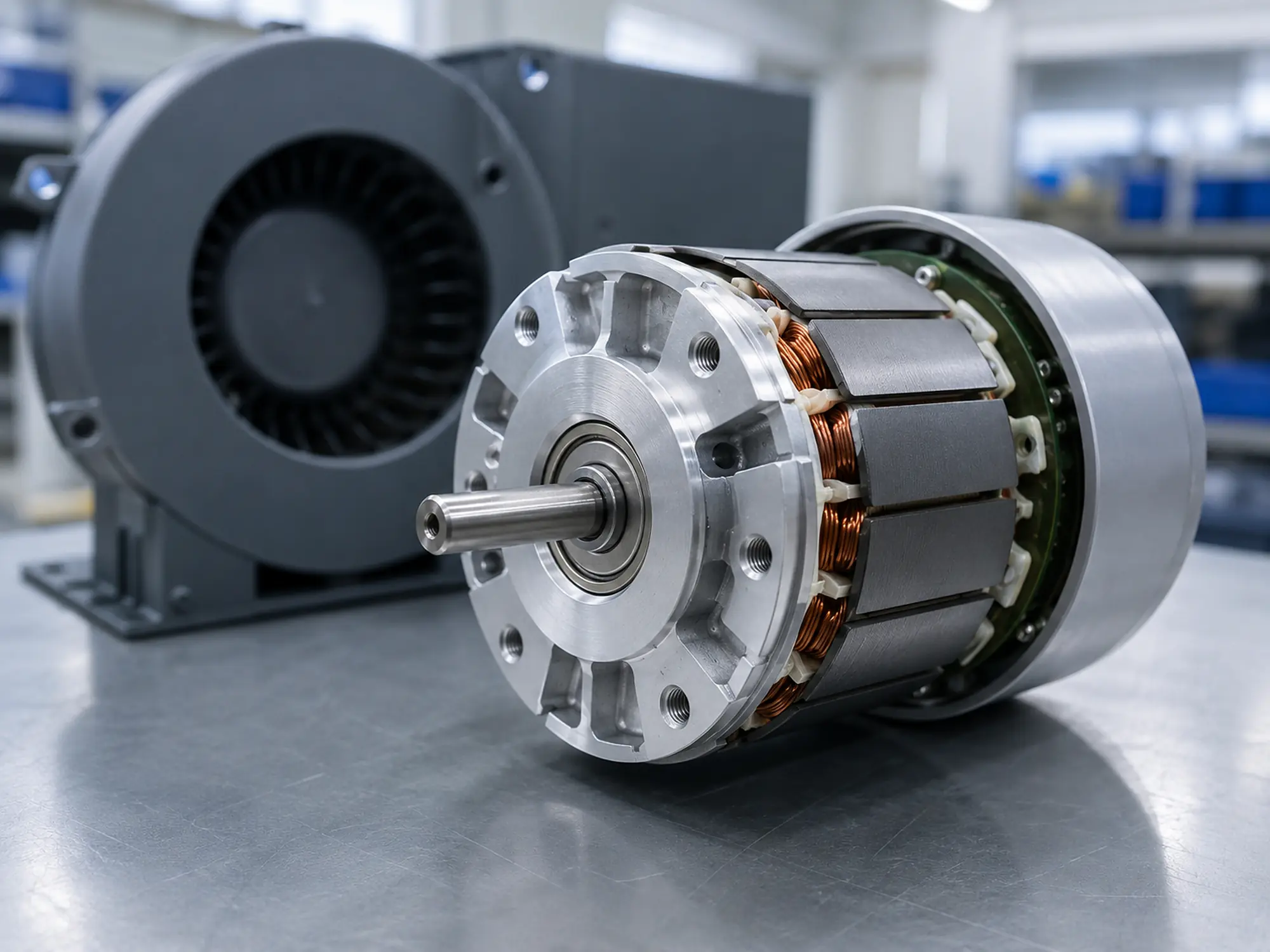
A small motor can pass its factory checks and still arrive with a new noise, roughness, or vibration concern. One possible mechanism is false brinelling: damage associated with vibration or very small oscillatory movement at rolling contacts while the bearing is not rotating normally. Transport is one condition in which that mechanism may need to be investigated.
That does not mean every noisy motor was damaged in transit. Impact indentation, incorrect fits, assembly force, contamination, corrosion, electrical damage, lubricant problems, and ordinary running wear can produce different or overlapping symptoms. A defensible conclusion needs the shipping history, bearing condition, assembly design, and controlled measurements—not a damage label chosen from appearance alone.
Start with the complete transport boundary
The bearing supplier usually controls the bearing package up to shipment, while the motor OEM controls installation, motor packaging, palletization, storage, and the route to the final assembly line. If those boundaries are not documented, each party may test a different condition.
Map the journey from the bearing factory to first motor operation. Record when the bearing is free, when it is installed, whether the shaft can move, the packaging layers, unit and carton orientation, pallet arrangement, transport modes, transfer points, warehouse dwell, and any known drops or unusual vibration exposure. Keep lot, motor, carton, and route identifiers linked so that a pattern can be investigated.
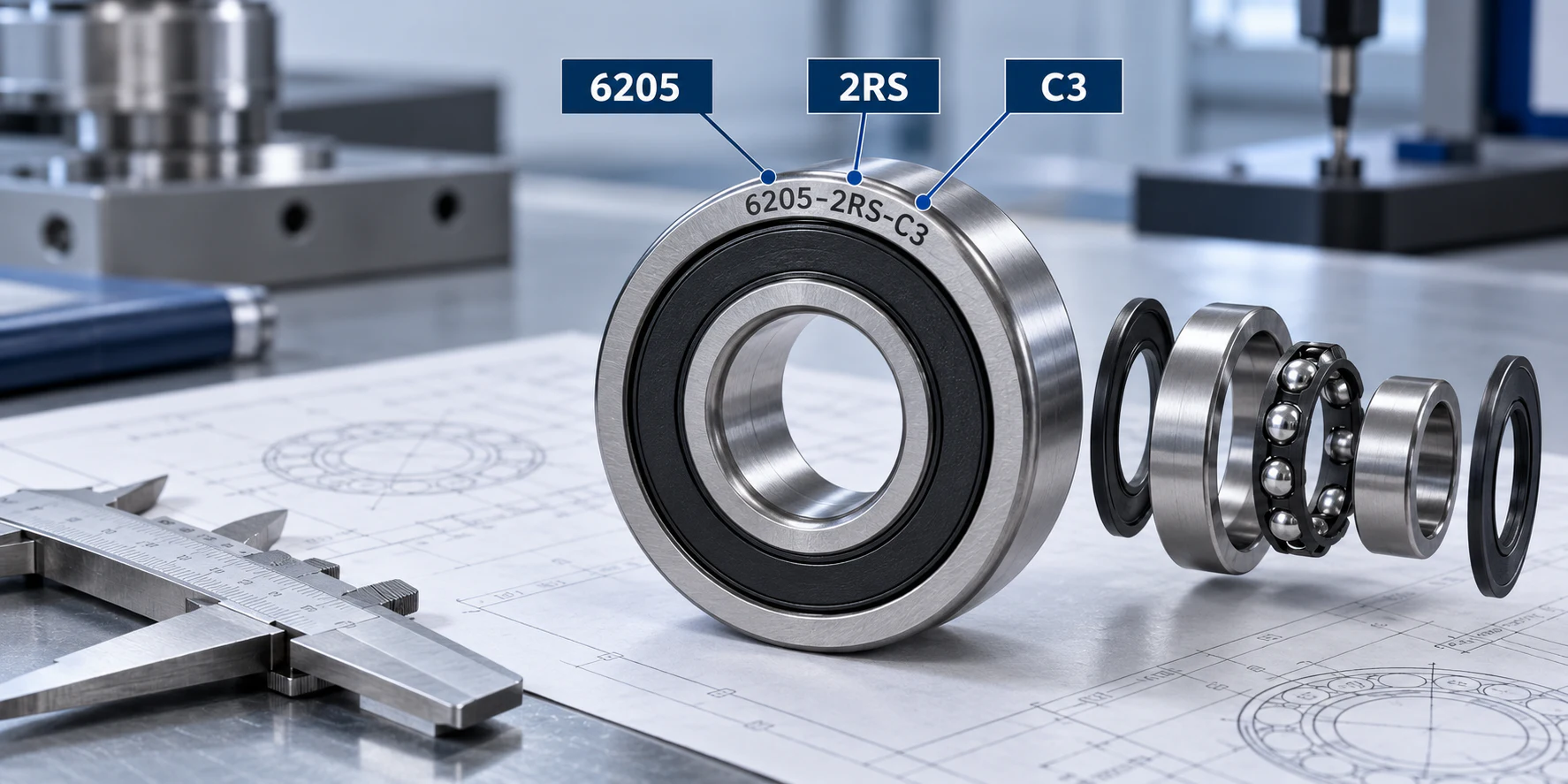
Also document the bearing construction and application conditions: bearing designation, internal clearance or preload approach, closures, lubricant, fits, shaft and housing materials, rotor mass, motor orientation, and the noise or smoothness requirement. These inputs help define which samples should be compared and which explanations remain plausible.
Separate false brinelling from true brinelling
NSK's troubleshooting reference describes false brinelling as wear-like hollow spots associated with vibration or small oscillation at rolling contacts. It identifies vibration while stationary during transport as one possible cause and mentions transport restraint, preload, and lubricant considerations among possible countermeasures.
Malloy Wind's application article draws a practical distinction between brinelling caused by excessive load or impact and false brinelling associated with vibration. That distinction matters because the corrective actions are different. Stronger cushioning may help with shocks, while a low-level repeated vibration problem may require attention to movement, restraint, resonance, orientation, lubricant behavior, or the assembled system.
These sources provide a diagnostic framework, not a verdict for a particular motor. An OEM should avoid classifying a mark until an engineer reviews its shape, spacing, location, surface condition, and relationship to the rolling-element contacts together with the exposure history.
Compare before-shipping and after-shipping evidence
Establish a production-intent baseline
Select traceable motor assemblies from the intended production process. Record the bearing lot, motor build, fits, assembly tools, operator or line, lubricant condition where relevant, and packaging revision. Before transport testing, measure the agreed characteristics under a controlled setup.
Depending on the project, the baseline may include manual smoothness, starting and running current, shaft speed, temperature, noise, vibration, axial movement, or another application-specific measure. Define the instrument, fixture, load, supply conditions, sensor position, ambient condition, warm-up, and data-processing method. A before-and-after comparison is weak if the measurement method changes.
Include relevant controls
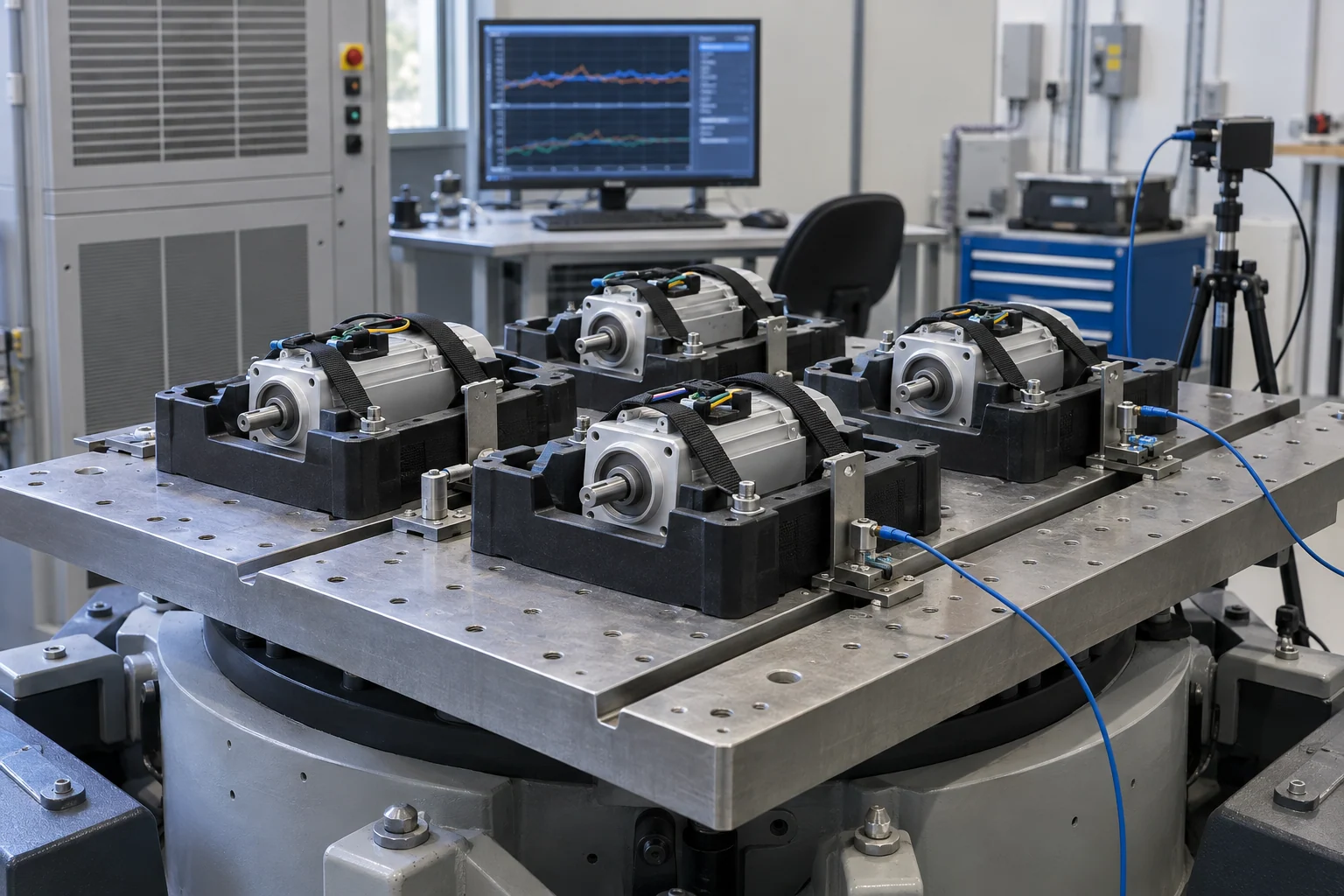
Use an unshipped control group stored under known conditions. If packaging alternatives are being compared, keep the motor build and measurement method consistent. When practical, include route-exposed samples and laboratory-tested samples, but do not assume that a generic laboratory profile reproduces the real distribution environment.
The engineer responsible for the product must set the number of samples and acceptance criteria. This article does not provide a universal vibration level, test duration, preload, or permissible change in noise or vibration.
Review packaging and restraint as a system
Packaging should prevent impact damage and control movement without creating a new load path through the shaft or bearing. Review how the motor is supported, whether the rotor can repeatedly move through a small angle, whether adjacent units can contact each other, and whether packaging stiffness or looseness changes after temperature or humidity exposure.
Shaft restraint may be relevant in some designs, as the NSK guidance indicates, but it must be reviewed at the motor level. A restraint that limits unwanted movement could also apply an unsuitable axial load, damage a connector, deform packaging, or be assembled inconsistently. The motor engineer must define the permitted direction, force, contact surface, installation method, and removal check.
Likewise, preload and lubricant are application decisions. Do not change bearing internal conditions or lubricant to solve a transport concern without rechecking running torque, temperature, noise, speed capability, and life-related risks. The selected bearing and motor design still need to work after transport.
Inspect without destroying the evidence
When a motor fails an incoming or end-of-line check, quarantine it with its packaging and traceability information. Record the symptom before disassembly. Compare it with a control using the same measurement setup, and inspect the external assembly for loose hardware, shaft movement, impact indicators, corrosion, contamination, or packaging damage.
If teardown is authorized, define the method before opening the bearing. Photograph component orientation and condition consistently. Avoid cleaning away lubricant, particles, or surface evidence before the initial inspection is documented. A bearing specialist should review suspected raceway marks and their relationship to the rolling elements.
Do not treat a single photograph as proof of root cause. A useful investigation combines physical evidence with exposure records, measurement trends, packaging configuration, assembly history, and repeatable comparison samples.
Build a transport-validation decision plan
A practical plan can follow five steps:
- Freeze the production-intent motor, bearing, assembly, and packaging revisions.
- Measure traceable samples before exposure using one controlled method.
- Apply the agreed transport route or test profile, while recording orientation and deviations.
- Repeat functional checks and, where justified, perform controlled teardown inspection.
- Compare results with the pre-test baseline and stored controls, then document corrective actions and revalidation.
The plan should also state what happens after a failure: quarantine scope, additional sampling, supplier notification, route review, packaging change, assembly review, and the evidence required for release. If several variables change together, the team may know that the package improved but not which control was effective.
Questions for the bearing and motor supply chain
Before releasing a transport-control plan, ask:
- What bearing and motor characteristics are most sensitive at incoming inspection?
- Which party owns bearing packaging, motor packaging, palletization, and route validation?
- Can the shaft or rotor move while the motor is stationary, and is that movement controlled?
- Are bearing lot, motor build, carton, pallet, route, and inspection results traceable?
- Which lubricant, fit, clearance, preload, and orientation details must remain unchanged?
- What measurements and teardown observations will support or reject a false-brinelling hypothesis?
- What change-control and revalidation rules apply to packaging, route, motor, or bearing revisions?
FAQ
Can a bearing be damaged even when the motor is switched off?
It is possible for stationary vibration or small oscillation to be associated with false-brinelling damage. Whether it occurred in a specific motor must be established from exposure, inspection, and controlled comparison evidence.
Does visible packaging damage have to be present?
No. A package may show no obvious impact mark while the assembly experienced repeated vibration. Conversely, a damaged carton does not prove bearing damage. Inspect both the package and the motor using defined criteria.
Is shaft restraint always the answer?
No. Restraint is one consideration identified in manufacturer guidance, but its design and permitted load must be validated for the complete motor and packaging system.
Can incoming noise testing confirm false brinelling?
Noise or vibration testing can identify a changed condition, but it does not by itself establish the root cause. Traceability, exposure records, visual or teardown evidence, and comparison samples are still needed.
Should the lubricant be changed for shipping?
Only after application review. A change intended to address transport vibration may also affect starting torque, running temperature, noise, speed, and service behavior.
Evidence record and engineering limits
- NSK Europe — False Brinelling supports the association with vibration or small oscillation, transport while stationary, and consideration of restraint, preload, and lubricant. It does not define a universal motor-packaging limit or diagnose a LUMI application.
- Malloy Wind — Brinelling vs False Brinelling supports distinguishing impact or excessive-load indentation from vibration-related false brinelling. It is an application specialist reference, not a project-specific transport test.
Prepare a transport question for LUMI
LUMI can review a small or miniature bearing only within the actual motor and transport boundary. Share the bearing model, motor construction, fits, clearance or preload approach, lubricant, operating requirements, packaging drawing, route or test profile, before-and-after measurements, and any controlled inspection findings. Review the miniature bearing range, application context, quality process, and sample-to-production lot control guide, then use the project inquiry form for an engineering discussion.