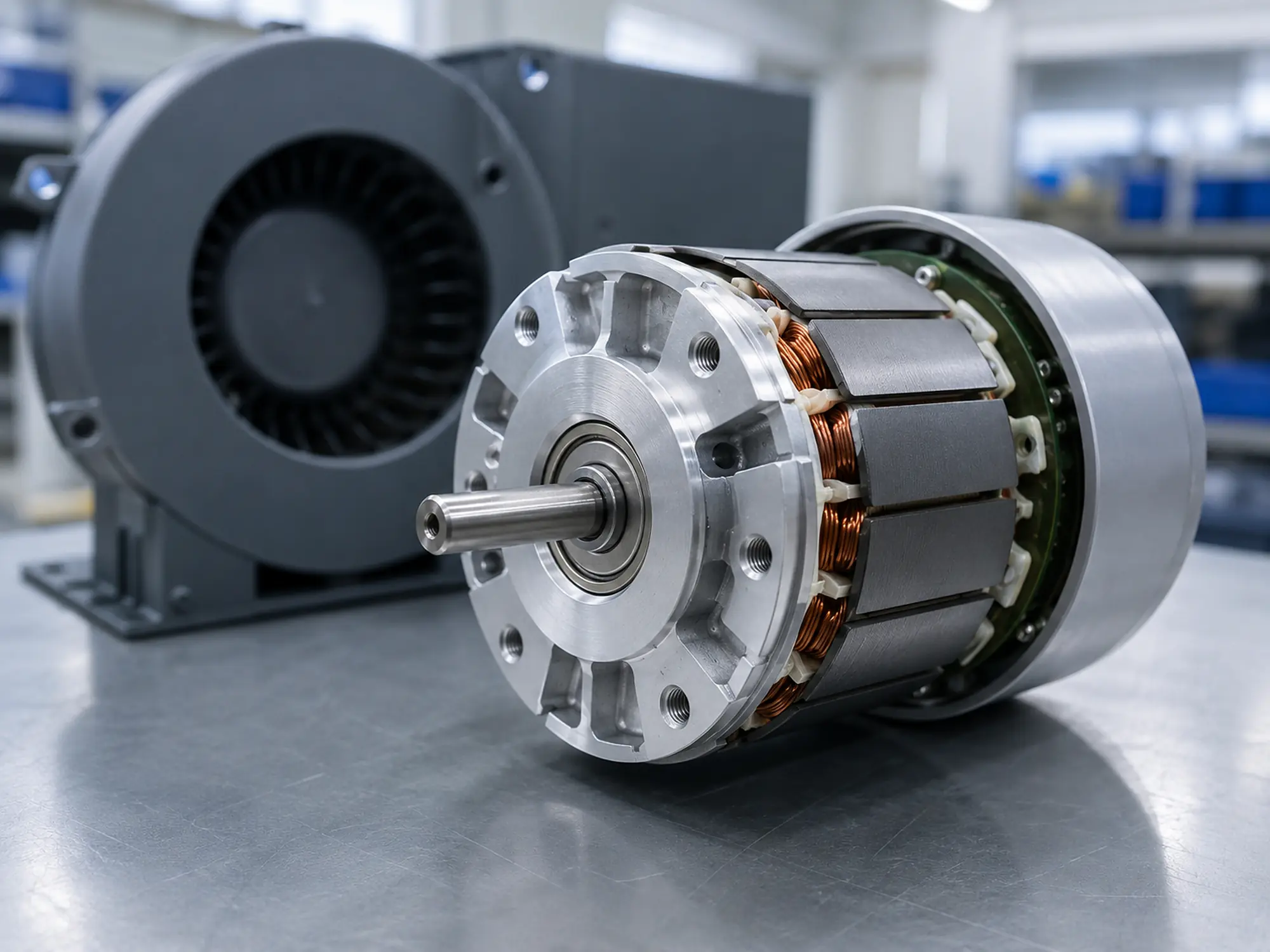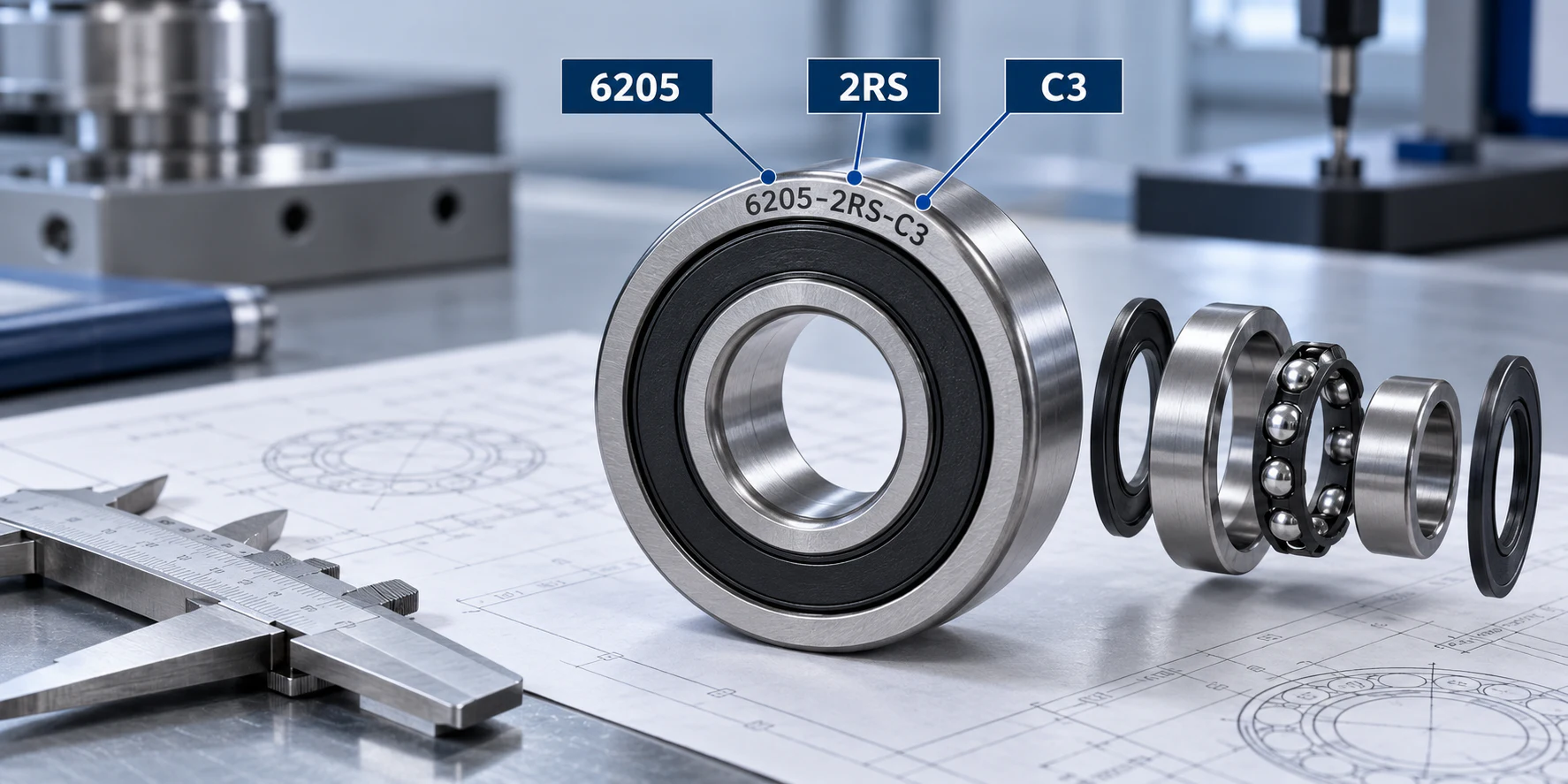

Naming a grease does not complete a miniature-bearing lubrication specification. The quantity inside the bearing can affect how the assembly starts, runs, warms, retains lubricant, and behaves after storage or repeated cycles. For a low-torque motor or instrument, lubricant chemistry and fill must be controlled together with the bearing, closures, speed, load, temperature, noise target, materials, and test method.
That does not produce one correct fill percentage for every miniature bearing. A reduced fill may help one torque target but provide an unsuitable retention or life-related margin in another duty cycle. A larger fill may support another application yet create unacceptable churning, heat, leakage, or run-in behavior. The correct value is a product- and application-specific range that must be validated.
Define the operating requirement before the grease
Start with the equipment, not the lubricant catalogue. Record bearing size and arrangement, speed range, acceleration, starts and stops, duty cycle, radial and axial load, orientation, ambient and internal temperatures, closures, expected service interval, noise and vibration limits, and whether the product is stored for long periods before use.
For miniature motors and instruments, separate breakaway or starting behavior from steady running behavior. The measurement that matters at first movement may differ from the value after the lubricant has redistributed and the assembly has reached temperature. Define both if both affect the product.
Also document special exposures such as vacuum, clean environments, moisture, cleaning agents, sterilization, dust, or nearby polymer components. These conditions may narrow the acceptable lubricant chemistry or require compatibility evidence. Do not assume that a grease used in one motor is transferable to another bearing size, speed, closure, or material system.
Specify lubricant chemistry and fill separately
MinebeaMitsumi's miniature-bearing reference distinguishes oil and grease and describes grease through its base oil, thickener, and additives. It connects lubricant selection with life, torque, rotating performance, and noise. It also presents multiple fill categories and notes the need to consider the operating environment and compatibility with nearby resin materials.
This supports an important RFQ distinction:
- lubricant identity or controlled performance specification defines what is applied;
- fill range defines how much is applied;
- application and test requirements define whether the combination is acceptable.
A grease trade name alone may not define fill, application location, process, tolerance, or change control. Conversely, a fill percentage without a stated reference volume and method can be ambiguous. The supplier and OEM should agree how fill is defined, measured, recorded, and linked to the lot.
Understand why fill changes torque behavior
Grease must move and redistribute as the bearing rotates. Its consistency, base-oil behavior, thickener system, quantity, location, temperature, and operating speed can influence resistance during start-up and running. SMB Bearings' specialist guide discusses practical trade-offs among oils, grease viscosity, low-torque grease, fill amount, retention, and excessive grease. It connects lubrication with torque, noise, heat, corrosion protection, speed, and service life.
These relationships do not justify diagnosing every high-current or warm motor as overfilled. Fits, internal clearance, preload, seals, misalignment, contamination, electrical conditions, rotor balance, and assembly damage can produce similar symptoms. A useful test changes the lubricant variable deliberately while keeping the rest of the assembly controlled.
Define starting and running measurements
Starting condition
Specify the conditioning period before the test, storage temperature, time since lubrication or assembly, shaft orientation, initial position if relevant, drive method, acceleration, applied load, and instrument resolution. If the equipment has a maximum starting current or minimum starting voltage, connect the bearing measurement to the actual system requirement without treating the two as interchangeable.
Repeated starts may change the lubricant distribution. Decide whether the acceptance value applies to the first start, a sequence of starts, or a stabilized condition. Record the complete sequence so supplier and OEM results can be compared.
Running condition
Define speed, load, duration, ambient, sensor locations, warm-up, and the point at which torque, current, temperature, noise, and vibration are recorded. Preserve the time history where possible. A single final reading can hide a high initial peak or an unstable trend.
If run-in is permitted, specify it as a controlled process with a maximum duration and clear acceptance rule. Do not use uncontrolled running to make a nonconforming bearing pass after the fact.
Treat fill as a production process
The approved result depends on more than the nominal target. The lubrication process should control material identity, batch, storage and conditioning, dispensing equipment, application location, quantity, environmental cleanliness, operator or machine settings, verification, and rework. A scale, volume dispenser, image check, or another method may be appropriate, but the measurement capability must match the decision.
Define how the supplier prevents cross-contamination and unapproved substitution. If the lubricant formulation is proprietary, the OEM still needs an agreed identification and change-notification mechanism. A material change that appears equivalent on paper may alter torque, noise, compatibility, retention, or temperature behavior.
Lot records should link the bearing lot, lubricant batch or controlled identifier, fill process, inspection results, and shipment. The evidence level must be agreed; a generic certificate that is not connected to the delivered lot cannot verify the actual lubrication condition.
Review closures, leakage, and compatibility
A shield, non-contact seal, or contact seal changes the retention and torque boundary. The bearing specification should identify the exact closure construction and orientation where relevant. A grease-fill comparison performed in an open bearing cannot be assumed to predict a sealed-bearing result.
Check for leakage or migration under the actual orientation, temperature, speed, and duty cycle. In compact motors and instruments, migrated lubricant may affect nearby components even if the bearing continues to rotate. Define what observation constitutes a failure and how it will be measured.
Compatibility must cover the complete assembly. MinebeaMitsumi's guidance specifically raises nearby resin materials; the OEM may also need to review closures, cages, adhesives, coatings, wires, and process residues. The responsible engineer should define the materials and exposure time included in the compatibility review.
Build a paired sample study
Compare production-intent bearings that differ only in the intended lubricant or fill variable wherever practical. Keep bearing geometry, internal clearance, closure, fit, preload, motor components, assembly process, and test setup consistent. Assign traceable sample IDs and record actual process data rather than only nominal labels.
Measure the agreed starting condition, running condition, warm-up trend, noise, vibration, temperature, leakage, and functional performance. If the application has storage, low-temperature start, repeated cycling, or long-duty requirements, include those conditions in a defined sequence.
Do not choose the winner from one short test or one average value. Review sample-to-sample spread, worst-case behavior, trends, and any outliers. The project engineer must determine sample quantity, test duration, limits, and whether endurance or application testing is needed.
Convert the result into a controlled specification
After validation, freeze the bearing designation, lubricant identifier or agreed specification, fill definition and range, application method, closures, key process settings, inspection method, and change-notification requirements. State which torque or equipment measurements apply and under what conditioning and test conditions.
Include a reaction plan for fill or torque results outside the approved range. It should cover quarantine, traceability, measurement confirmation, containment, root-cause review, corrective action, and requalification. Avoid informal adjustments that add or remove grease without a documented process.
RFQ and sample checklist
Before requesting low-torque samples, provide:
- bearing designation, arrangement, closure, clearance or preload, fit, and orientation;
- speed, acceleration, starts, stops, load, duty cycle, and temperature range;
- lubricant restrictions, compatibility materials, retention and leakage requirements;
- starting and running torque, current, temperature, noise, and vibration methods;
- fill definition, process control, traceability, sample plan, and acceptance limits;
- storage, run-in, cycling, endurance, and change-notification requirements.
FAQ
Is less grease always better for low torque?
No. Reducing fill may change torque, but the complete application must still meet lubrication, retention, temperature, noise, and life-related requirements.
Can the OEM specify only the grease brand?
No. The RFQ should also control fill, application method, closures, conditioning, measurements, traceability, and change notification.
Is a fill percentage self-explanatory?
No. The parties must agree what volume it references, how it is applied and measured, and what tolerance and test method apply.
Can motor current replace a bearing torque test?
Motor current can be a useful system-level indicator, but it includes more than bearing torque. Use the measurement appropriate to the engineering decision and define its boundary.
Should a new lubricant or fill be approved from a short warm-run test?
Not automatically. The validation scope must reflect storage, starts, speed, load, temperature, cycling, leakage, noise, compatibility, and service expectations.
Evidence record and engineering limits
- MinebeaMitsumi — Lubricants for miniature and small ball bearings supports separating oil, grease, base oil, thickener, additives, fill categories, operating environment, torque, noise, life, and resin compatibility. Its listed fill categories are not adopted as universal LUMI rules.
- SMB Bearings — Bearing lubrication for high performance supports the practical relationships among lubricant type, viscosity, fill amount, retention, torque, heat, noise, speed, corrosion protection, and service life. It is not a project-specific specification.
Prepare the lubrication boundary for LUMI
LUMI can review a pre-lubricated miniature bearing only against the actual equipment and test boundary. Share the bearing arrangement, speed and load profile, fits, clearance or preload, closures, temperature, starting and running requirements, noise and vibration method, material compatibility list, storage condition, leakage criteria, and validation plan. Review the miniature bearing range, ZZ versus 2RS guide, application context, and quality process, then use the project inquiry form for a controlled sample discussion.